
Last updated October 30, 2026
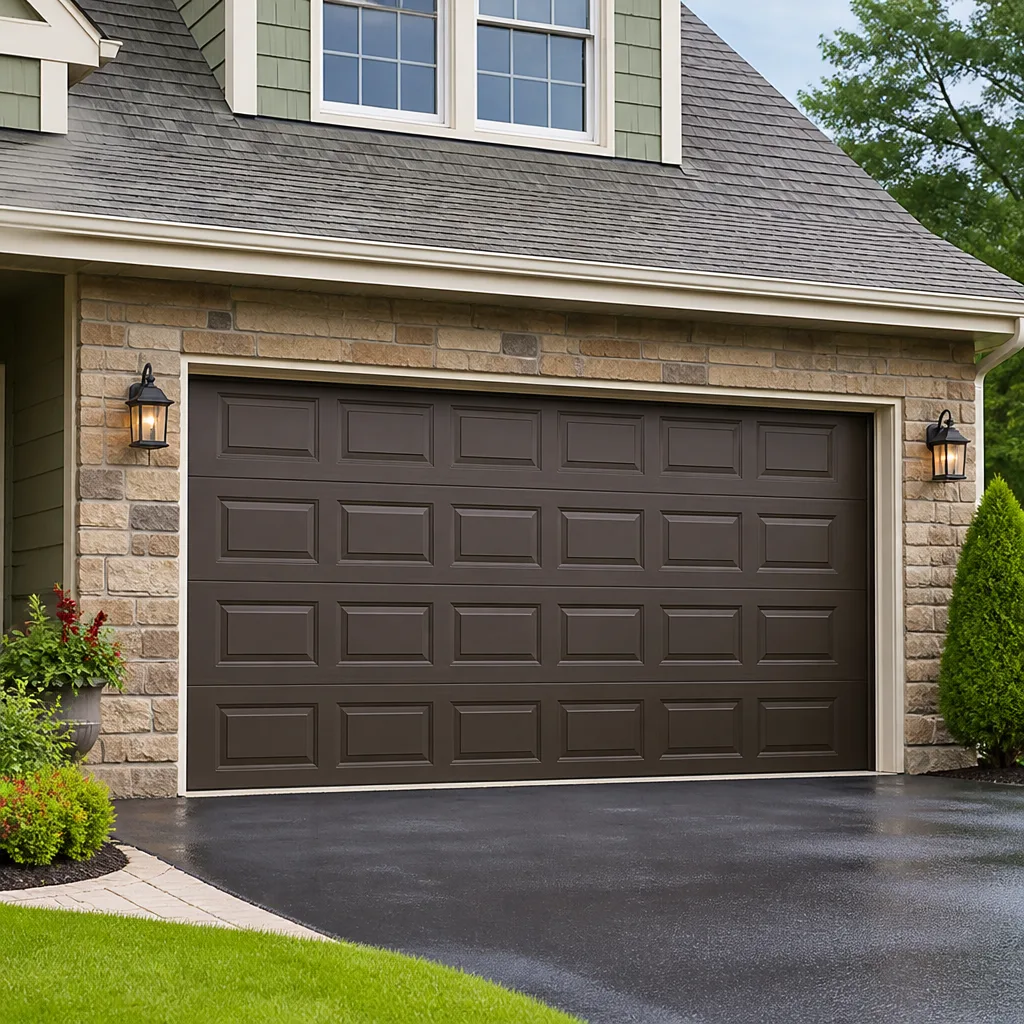 Raised-panel steel
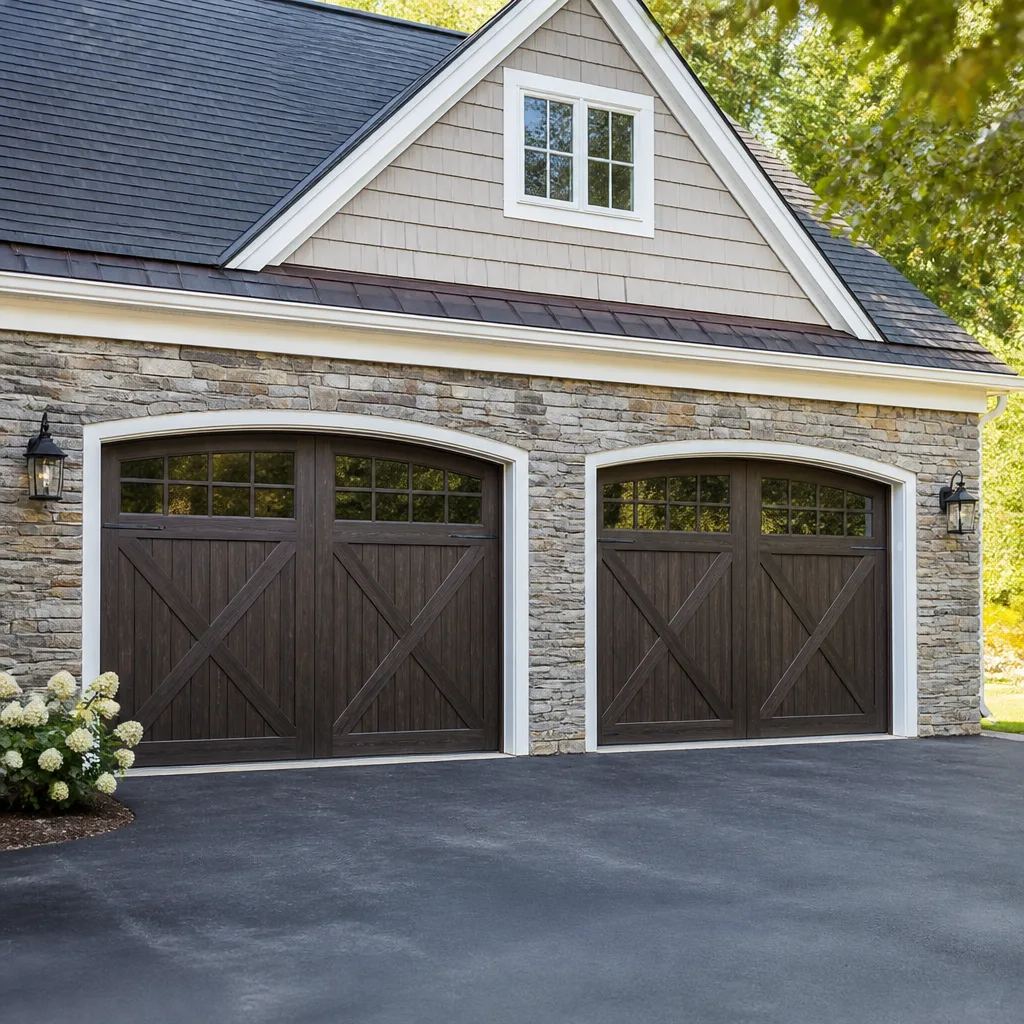 Carriage house
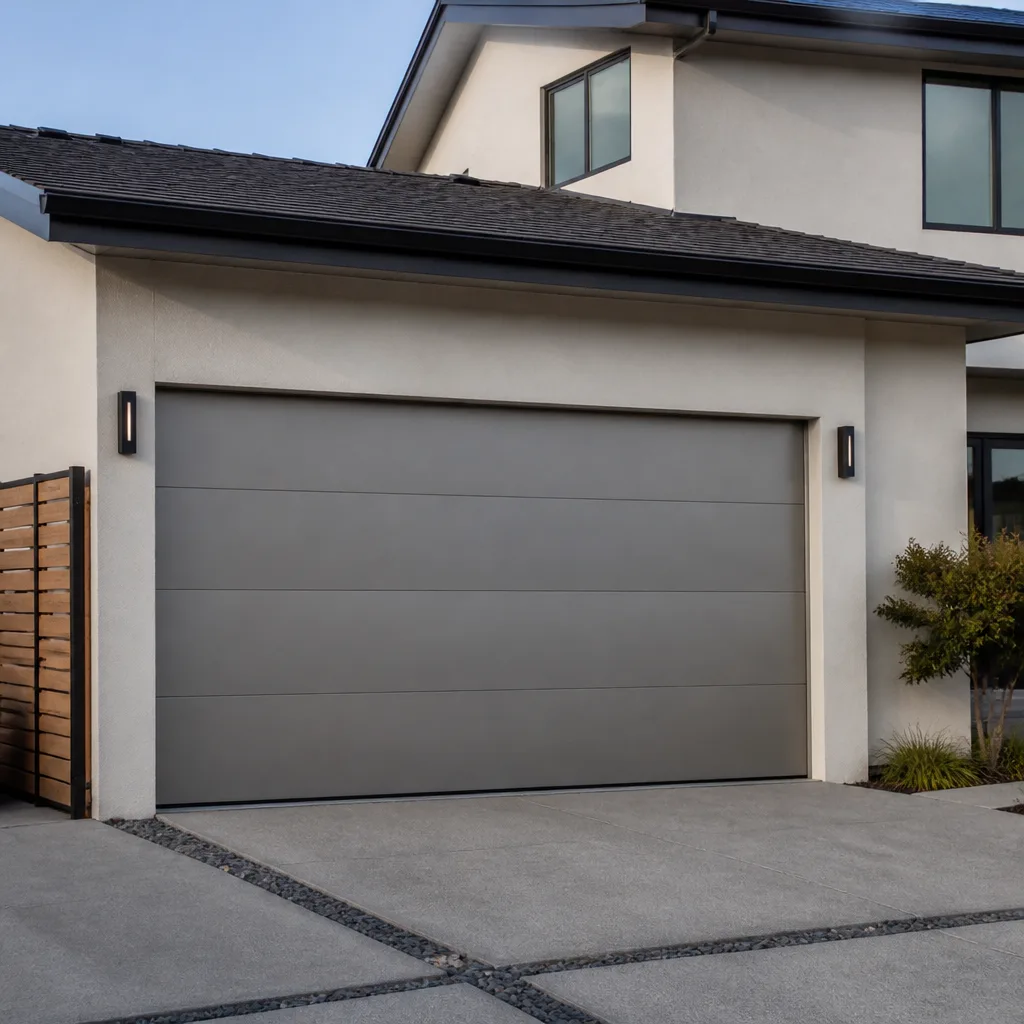 Modern flush
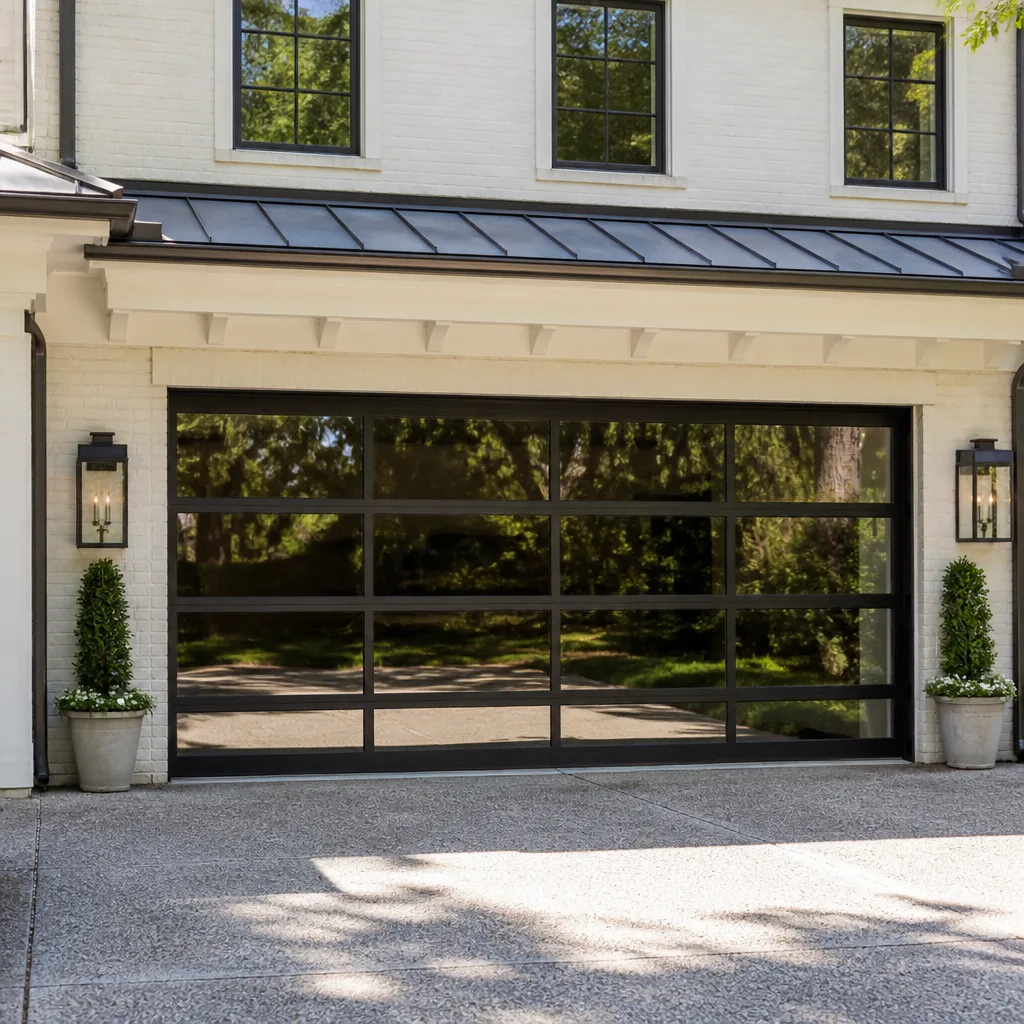 Full-view glass
 LiftMaster openers
 Chamberlain openers
Full 25-point door and opener safety check with every visit - springs, cables, rollers, tracks, and your LiftMaster or Chamberlain opener included
You get a price before we start. It does not change when the truck arrives.
Get your free estimateThe Complete Garage Door Repair Guide for Ontario Homeowners
Ontario’s Inland Empire heat regularly pushes garage temperatures past 120°F in summer, and that thermal stress is responsible for more garage door failures here than anywhere else in Southern California. Most repair guides never mention it, which means homeowners end up treating symptoms instead of causes. This guide will walk you through a diagnostic-first framework that identifies the three root causes behind most Ontario garage door problems: heat expansion, track misalignment, and worn springs. By the end, you’ll know what’s actually wrong with your door, what it should cost to fix, and when to pick up the phone instead of a wrench.
Styles & brands we work with
Quick Answer
Our Garage Door Repair services in Ontario, CA typically cost between $150 and $350 for most common fixes, with spring replacement running $180 to $340 and track realignment usually landing under $200. The three most common problems in Ontario are heat-related spring fatigue, track misalignment from daily use, and cable wear accelerated by Santa Ana wind dust. Most repairs take under two hours when the technician arrives with the right parts, which is why brand-specific knowledge matters more than most homeowners realize.
Table of Contents
- The Three Root Causes Behind Most Ontario Garage Door Failures
- How Ontario’s Climate Attacks Your Garage Door
- The 10-Minute Diagnostic Inspection
- DIY vs. Professional Repair: A Decision Tree That Actually Works
- Brand-Specific Repair Notes for Ontario’s Most Common Doors
- The Real Cost Breakdown by Repair Type
- How to Document Your Door Problem Before Calling
- Common Mistakes to Avoid
- When to Call a Professional
- Frequently Asked Questions
- The Bottom Line
The Three Root Causes Behind Most Ontario Garage Door Failures
After repairing thousands of doors across Ontario, we’ve learned that nearly every service call traces back to one of three problems. Identifying which one you’re dealing with before you call anyone will save you time, money, and a lot of frustration. Here’s what’s actually happening when your door acts up.
Heat expansion is the big one most guides miss. Ontario summers push garage temperatures well past 110°F on a regular basis, and in direct sun, the metal panels and tracks can hit 130°F or more. Metal expands when it heats. Your door’s tracks, panels, and hardware are engineered with small tolerances, and when those tolerances get eaten up by thermal expansion, you get binding, grinding, and doors that stick halfway. This isn’t a defect in your door. It’s physics meeting Inland Empire weather.
Track misalignment is the second culprit and it’s almost always cumulative. Every cycle of your door, every car that backs out a little too close, every kid who accidentally bumps the track with a bike, nudges things slightly out of alignment. Over months and years, those tiny shifts add up. What starts as a barely noticeable wobble becomes a door that strains the opener motor, wears rollers unevenly, and eventually refuses to close all the way. In Ontario’s newer housing tracts near Archibald and Vineyard, we see this constantly because garages double as storage units and workspaces, which means more traffic near the tracks.
Worn springs round out the trio. Torsion springs have a finite lifecycle, typically rated for 10,000 cycles. A cycle is one full open and close. If you use your door four times a day, that’s about seven years of normal service. Heat accelerates metal fatigue. Ontario’s summer temperatures combined with the natural stress cycling means springs here often fail on the earlier end of their rated range. When they go, they go suddenly, and the sound is unmistakable, like a gunshot in the garage.
Understanding which of these three you’re facing is the entire game. Everything else, broken cables, burned-out opener gears, shattered rollers, is usually a downstream consequence of one of these three root causes.
How Ontario’s Climate Attacks Your Garage Door
Ontario sits in a sweet spot for garage door stress that coastal homeowners never experience. The heat is the headline story, but it’s not the only factor. Santa Ana wind events push fine dust and grit into every moving component. The temperature swings between hot days and cool nights create condensation cycles that accelerate rust on unprotected hardware. And the summer heat does something specific to springs and cables that most national repair guides never address.
Here’s what’s happening to your door across the seasons in Ontario:
- Summer thermal cycling: Daily expansion and contraction stresses metal fatigue points, particularly on torsion springs and cable connections. Doors in direct afternoon sun, common on west-facing garages in neighborhoods like Creekside and Edenglen, take the worst of it.
- Santa Ana dust infiltration: Fine desert grit works its way into roller bearings and hinges, turning smooth metal surfaces into abrasive ones. Rollers that should last 10 to 15 years in coastal climates often need replacement in 5 to 7 here.
- Temperature differential stress: The gap between a 100°F garage interior and a 70°F evening creates condensation on exposed metal. That moisture accelerates rust on cables, springs, and track brackets, especially in older Ontario homes built before corrosion-resistant hardware became standard.
- Opener motor strain: Heat makes motors work harder. When your door’s components are slightly out of spec due to thermal expansion, the opener compensates by drawing more current, which shortens the motor’s life and can trip thermal overload switches on the hottest days.
None of this means you need a different door. It means you need a maintenance approach that accounts for Ontario’s specific conditions. A door that receives regular lubrication with a silicone-based product, has its hardware torqued seasonally, and gets its springs inspected before summer peak will dramatically outperform one that’s ignored until something breaks.
The 10-Minute Diagnostic Inspection
Before you call anyone, run through this quick inspection. It’ll take you ten minutes, require no special tools, and will give any technician you speak with an accurate picture of what’s happening. This is the same first-pass assessment we do when we arrive at a home in Ontario, and it works whether you’re in the newer developments off Haven Avenue or an older neighborhood near Euclid.
- Disconnect the opener. Pull the red emergency release cord. Your door should now move by hand. If it doesn’t move smoothly when you lift it manually, the problem is mechanical, not the opener. If it moves freely by hand but won’t open with the motor, you’ve isolated the issue to the drive system.
- Lift the door halfway and release. A properly balanced door stays in place at the halfway point. If it drops, your springs are weak or broken. If it shoots upward, the springs are over-tensioned. Either way, you need spring service.
- Listen during the full travel. Grinding suggests roller or hinge problems. Squealing is usually dry rollers or a worn bearing plate. A rhythmic thumping often means a bent track section. Your ears will tell you more in 30 seconds than most diagnostic charts.
- Check the gap. Close the door and look at the seal along the bottom. An uneven gap left to right means the door is out of level, usually a spring or cable issue. An uneven gap front to back means track misalignment.
- Visually scan the cables. Look for fraying, especially near the bottom bracket where cables attach. Do not touch them. Cables under tension can cause serious injury. Visual inspection only.
- Note where the noise is loudest. Then write down or remember that location. When you describe the problem over the phone, this detail helps enormously. “Grinding noise on the left side near the top” is far more useful than “it’s making a noise.”
Ten minutes, six steps, and you’ll know more about your door than 90% of homeowners who pick up the phone. If any step reveals a spring or cable issue, stop there. Those are not DIY repairs, and we’ll cover exactly why in the next section.
DIY vs. Professional Repair: A Decision Tree That Actually Works
Some garage door repairs are genuinely safe to handle yourself. Others can kill you. That’s not hyperbole. The distinction comes down to one question: does the repair involve components under high tension?
Here’s the decision framework we recommend to Ontario homeowners, not the vague “if you’re handy” stuff you see on general home improvement sites, but actual lines you can apply. For a deeper comparison, see DIY vs Professional Garage Door: The Ontario Homeowner’s Decision Guide.
Safe to DIY if you’re comfortable with basic tools:
- Lubricating rollers, hinges, and springs: Use a silicone-based spray, never WD-40, which is a solvent that strips lubricant. Apply to rollers and hinges twice a year in Ontario, once before summer and once before winter.
- Tightening loose hardware: Track bolts, hinge screws, and opener mounting brackets all vibrate loose over time. A socket set and ten minutes handles this.
- Cleaning and aligning safety sensors: The photo-eye sensors near the bottom of the track get dusty fast in Ontario’s Santa Ana season. A soft cloth and gentle realignment usually fixes a door that reverses for no apparent reason.
- Replacing weather stripping: The bottom seal degrades in heat. This is a slide-out replacement on most brands, under $30 in parts, and requires no special skill.
Never DIY, always call a professional:
- Torsion spring replacement: These springs are wound under 90 to 180 pounds of torque each. When they release uncontrollably, they break bones, lacerate skin, and have killed people. This is the single most dangerous repair in residential construction. Do not attempt it.
- Extension spring replacement: Slightly less dangerous than torsion springs but still lethal when a safety cable isn’t installed properly. The spring itself can become a projectile.
- Cable replacement: Cables work in tandem with springs. When a spring breaks, the cable whips. When a cable snaps under load, it can sever fingers. Always professional territory.
- Track repair that involves removal or bending: Tracks are load-bearing structural components. Improper repair leads to door derailment, which is a threat to both property and people.
We’ll be direct: if your problem involves springs, cables, or track geometry, call us. The money you save doing it wrong doesn’t come close to the cost of the injury risk. Our Garage Door Repair in Ontario service handles these high-tension components with the proper winding bars, safety protocols, and experience.
Brand-Specific Repair Notes for Ontario’s Most Common Doors
Not all garage doors are built the same way, and knowing what’s on your home changes how a repair should be approached. Ontario’s housing stock spans decades, which means we see everything from original 1980s Wayne Dalton doors in older neighborhoods to brand-new LiftMaster smart openers in the developments north of the 60 freeway. Here’s what we’ve learned about the brands we service most.
LiftMaster remains the dominant opener brand in Ontario, particularly in homes built after 2005. These units use a specific gear-and-sprocket assembly that wears predictably. When a LiftMaster opener runs but the door doesn’t move, it’s usually a stripped drive gear, a $40 to $60 part that takes under an hour to replace. LiftMaster’s newer models also have logic boards that can be sensitive to Ontario’s summer garage temperatures. If your opener works fine in the morning but fails in the afternoon heat, thermal shutdown on the board is the likely culprit. We fix these constantly during July and August. For opener-specific issues, see our Garage Door Opener Repair in Ontario page.
Wayne Dalton doors use a unique TorqueMaster spring system that mounts inside the torsion tube rather than on the outside. This matters because a Wayne Dalton door that looks like it has no springs actually has them hidden inside. Many homeowners, and honestly some technicians, miss this. Wayne Dalton doors also use specific bottom brackets and hinge designs that aren’t interchangeable with generic parts. The good news is that when the spring is replaced correctly, these doors are reliable long-term performers. The bad news is that swapping in a universal torsion spring on a Wayne Dalton is a hack job that leads to premature failure.
Clopay doors are common in Ontario’s newer construction and carry a specific balance profile that’s tightly engineered. Clopay panels are lighter than many competitors, which means spring tension needs to be calculated precisely. An over-tensioned spring on a Clopay door creates exactly the “door shoots up” symptom we described in the diagnostic section. Clopay also uses proprietary roller stems on some models, so a generic roller replacement can wobble and wear the track unevenly.
Craftsman openers, which are manufactured by the same parent company as LiftMaster but built to a lower price point, show up frequently in Ontario homes from the 1990s and early 2000s. The most common failure we see is the travel limit module, which causes the door to reverse when it shouldn’t or refuse to close completely. Parts availability for older Craftsman units is becoming an issue, and in many cases, replacing the opener with a current model is more cost-effective than repairing a 25-year-old unit. If you’re facing that decision, our Garage Door Installation in Ontario service can walk you through current options.
The takeaway here is simple: when your technician arrives, they should know what brand you have before they start diagnosing. Brand familiarity isn’t a marketing point. It’s the difference between a repair that lasts and one that fails in six months.
The Real Cost Breakdown by Repair Type
Ontario repair pricing should be transparent, and you should know what you’re paying for before you approve anything. Here’s what we see across the market for the most common repairs, based on current parts and labor rates in the Inland Empire. Use these ranges as a benchmark when you’re comparing quotes.
| Repair Type | Typical Ontario Cost Range | Time on Site |
|---|---|---|
| Spring replacement (pair) | $180 – $340 | 45 – 90 minutes |
| Single spring replacement | $120 – $220 | 30 – 60 minutes |
| Cable replacement (pair) | $150 – $280 | 45 – 75 minutes |
| Track realignment | $125 – $200 | 30 – 60 minutes |
| Roller replacement (all) | $120 – $200 | 30 – 45 minutes |
| Opener gear replacement | $140 – $220 | 45 – 60 minutes |
| Safety sensor replacement | $90 – $150 | 20 – 30 minutes |
| Full diagnostic (no repair needed) | $60 – $90 | 20 – 30 minutes |
Here’s what this table should teach you. If someone quotes you $600 for a spring replacement, they’re padding. If someone quotes you $75 for the same job, they’re either using bottom-tier generic springs that won’t last, or they’re not planning to do the work properly including balancing the door afterward. Both extremes are red flags.
One more thing: every reputable company in Ontario, including us, quotes the price before work begins. The price you’re told on the phone should be the price on the invoice, unless the technician discovers something genuinely unexpected and walks you through the change before proceeding. If a company won’t commit to a price until they’re standing in your garage, that’s a signal to get another quote.
How to Document Your Door Problem Before Calling
When you call a garage door company in Ontario, the person on the phone will ask questions. The better you answer them, the faster the technician can diagnose, the more likely they’ll have the right parts on the truck, and the fewer trips you’ll need. Here’s how to prepare in under five minutes.
- Write down the brand and model. The opener brand and model are printed on the motor housing. The door brand is usually on a sticker on the interior edge of a panel, or on the lock handle. If you have a smart opener, note whether it’s Wi-Fi enabled. This takes 60 seconds and tells us more than any verbal description.
- Record a 15-second video. Use your phone to film the door cycling through a full open and close. Capture the sound. The audio matters more than the video. A technician who hears the problem before arriving is already halfway through the diagnosis.
- Note the time and temperature when the problem occurs. This matters more in Ontario than almost anywhere else. A door that only misbehaves in the afternoon heat is telling us something specific about thermal expansion. A door that fails at 7 a.m. when it’s cool is pointing toward a different cause. Your observation here could save a diagnostic visit entirely.
- Check the garage door’s age. If you know when the door or opener was installed, write it down. If you don’t know, look for a date stamp on the opener or check your home’s original construction documents if it’s the original door. Age tells us what we’re likely to find before we find it.
- Have your address and cross streets ready. Ontario is a big city with some confusing numbering. Your cross streets help the technician plan the route and arrive when they say they will.
This preparation takes minutes and saves you money. A technician who shows up already knowing the brand, the symptom, the sound, and the timing is a technician who solves the problem on the first visit. That’s the goal every time.
Common Mistakes to Avoid
- Spraying WD-40 on everything. WD-40 is a solvent that strips lubricant. After a week of hot Ontario weather, your door will be louder than before. Use a silicone-based garage door lubricant designed for the job.
- Replacing the opener when the door is the problem. We’ve lost count of how many Ontario homeowners have called us after buying a new opener that didn’t fix anything. Test your door manually before spending $300 to $500 on an opener you may not need.
- Ignoring a noisy door because it still works. Noise is your door telling you something is wearing. Every month you ignore it, the eventual repair gets more expensive. A $150 roller replacement becomes a $400 track and roller job once the track gets grooved.
- Attempting spring work with improvised tools. Winding bars exist for a reason. Screwdrivers, rebar, and Allen keys are not winding bars. Every year, homeowners end up in emergency rooms from improvising this repair. This is the one mistake on this list that can permanently alter your life.
- Hiring based on price alone. The cheapest quote in Ontario almost always means generic parts, rushed labor, or a technician who doesn’t know your specific brand. The goal is the right fix the first time, not the cheapest fix that needs redoing in a year.
- Deferring maintenance in the spring. Summer heat doesn’t cause problems. It exposes them. A spring inspection in April costs less than a spring replacement in August when every company in Ontario is booked solid and you’re waiting three days with a door that won’t open.
When to Call a Professional
Call a professional when the diagnostic inspection reveals spring, cable, or track problems. Call when your door makes a sound you’ve never heard before and you can’t identify the source. Call when the door won’t open and your car is trapped inside, because that’s a genuine emergency in Ontario where most families depend on their garage as the primary entry point. Call when you’ve tried the safe DIY fixes and the problem persists. Daybreak Garage Door Repair offers free estimates in Ontario, and when you call (877) 588-6760, the person on the phone will walk you through the same diagnostic questions from this guide so we can give you an accurate picture before sending a technician.
Frequently Asked Questions
Most garage door repairs in Ontario cost between $150 and $350, with spring replacement averaging $180 to $340 and smaller fixes like sensor realignment or lubrication running under $100. The exact price depends on your door’s brand, the specific failure, and whether parts are in stock locally. Call (877) 588-6760 for an exact quote, estimates are free.
Same-day service is available for most mechanical failures when you call before early afternoon. Spring and cable repairs are the most common same-day jobs, and our trucks carry parts for LiftMaster, Chamberlain, Genie, Clopay, Amarr, Wayne Dalton, Craftsman, and Raynor systems. Call (877) 588-6760 as soon as you notice a problem.
The price quoted over the phone is the price you pay, unless the technician identifies a genuinely different or additional problem and walks you through the revised quote before any work begins. You approve the price before anything gets done. No surprises, no after-the-fact additions.
Yes, our trucks are stocked for the eight most common brands in Ontario: LiftMaster, Chamberlain, Genie, Clopay, Amarr, Wayne Dalton, Craftsman, and Raynor. That means most repairs are completed on the first visit without waiting for parts to be ordered. Brand-specific springs, cables, rollers, and opener components are standard inventory.
Heat expansion causes metal tracks, panels, and hardware to expand, which tightens tolerances and causes binding, sticking, or opener overloads. This is a common Ontario-specific problem during summer months, especially on west-facing garages. The fix is usually track realignment with thermal expansion accounted for, not just the same adjustment a coastal technician would make.
Most springs are rated for 10,000 cycles, which works out to about 7 years of typical use at four open-and-close cycles per day. Ontario’s summer heat accelerates metal fatigue, so springs here often fail at the 5 to 7 year mark. If your springs are older than that, a preemptive replacement is cheaper than an emergency repair.
The Bottom Line
Ontario garage doors fail for three main reasons: heat expansion stressing metal components, cumulative track misalignment from daily use, and spring fatigue accelerated by our specific climate. Diagnose first, then repair. Safe DIY work includes lubrication, bolt tightening, sensor cleaning, and weather stripping. Spring, cable, and track work requires a professional, no exceptions. Know your brand, document your problem before calling, and get a price commitment before work begins. The right approach gets your door running again quickly and keeps it running through Ontario’s brutal summers.
If your door is acting up, call (877) 588-6760 now for a free estimate. We know your brand, we’re ready when the problem is, and one call covers it all, from Daybreak Garage Door Repair home to your garage in Ontario.
Written by the team at Daybreak Garage Door Repair, serving Ontario since 2011. Explore more guides & resources from our team.
See the difference
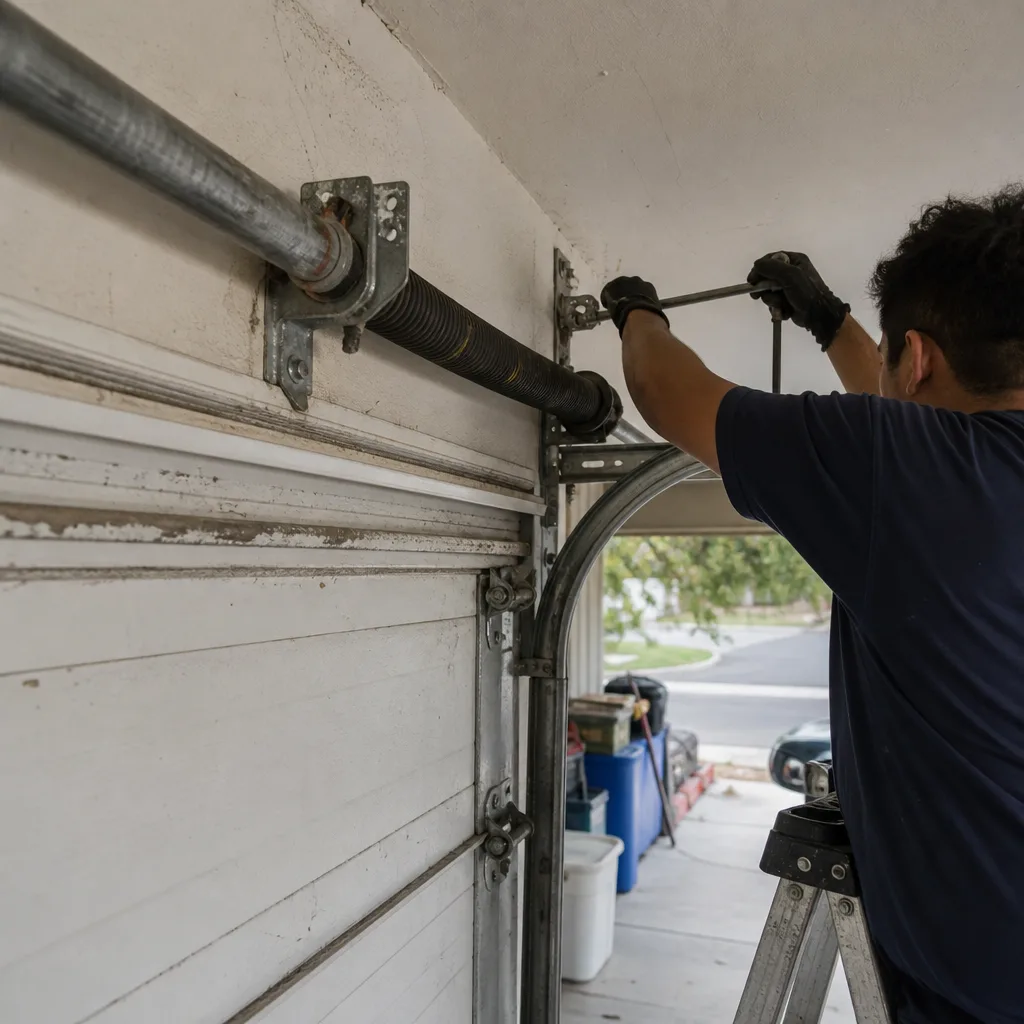 Before
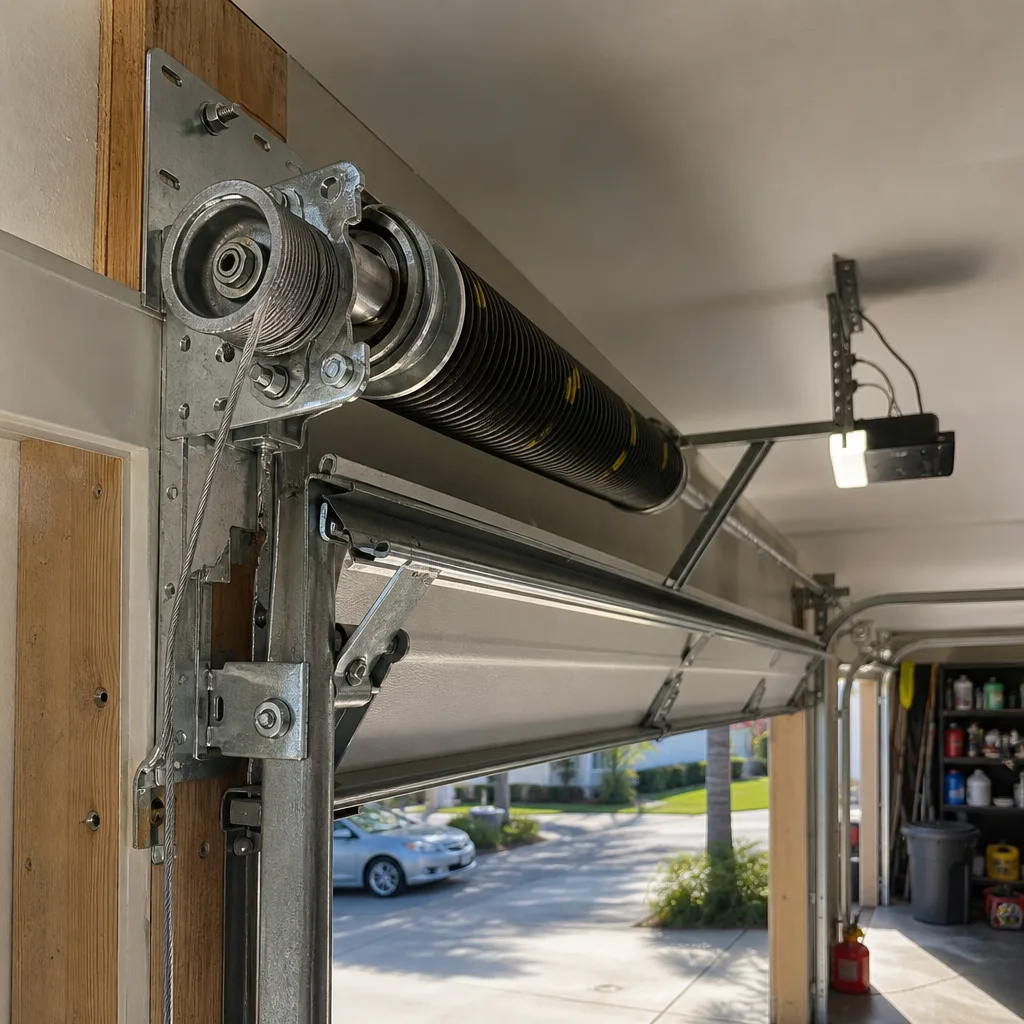 After
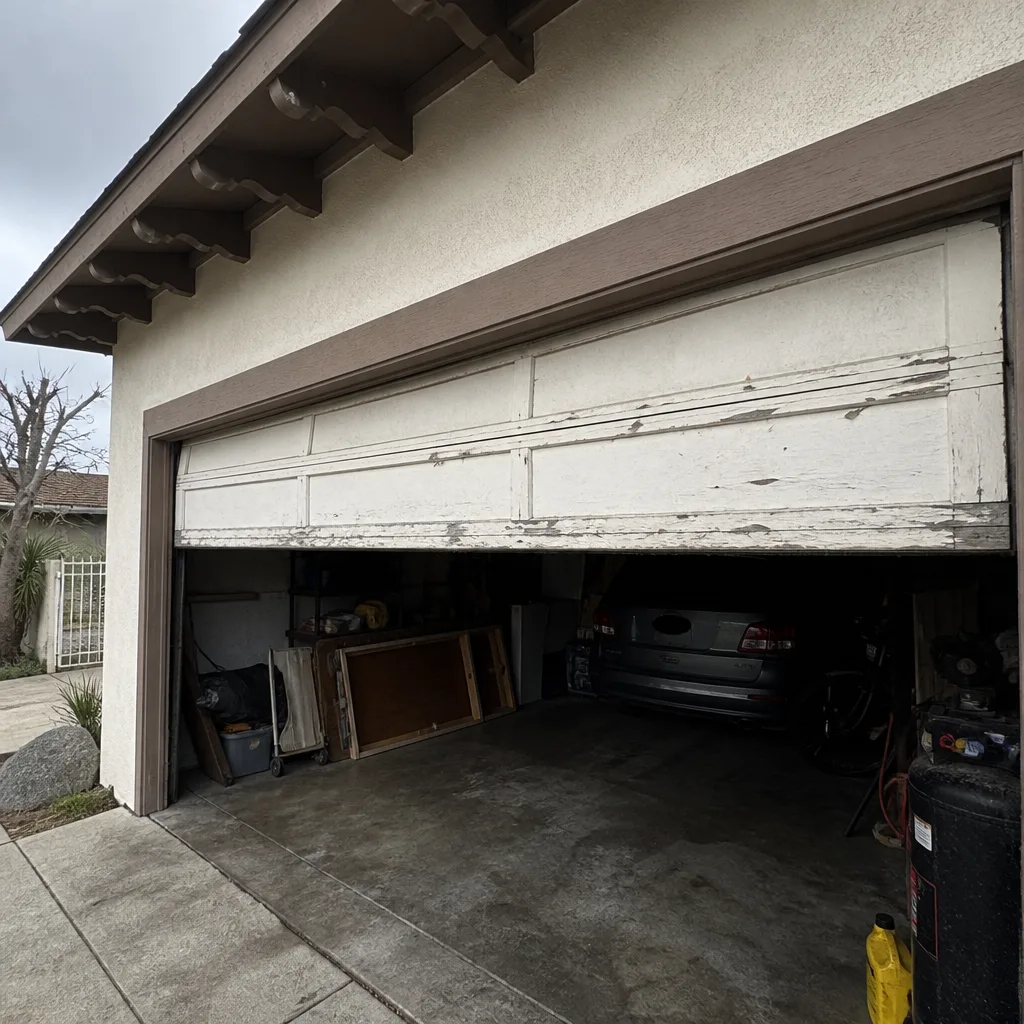 Before
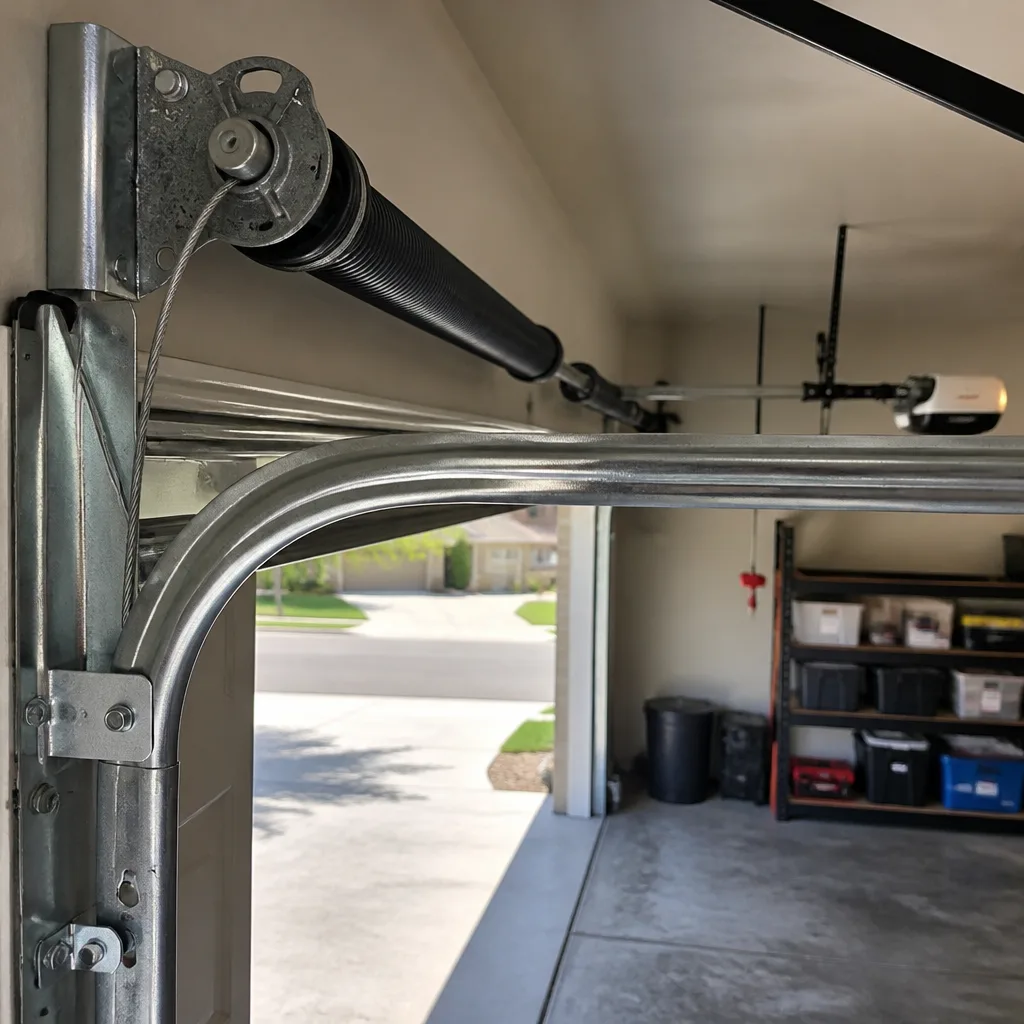 After
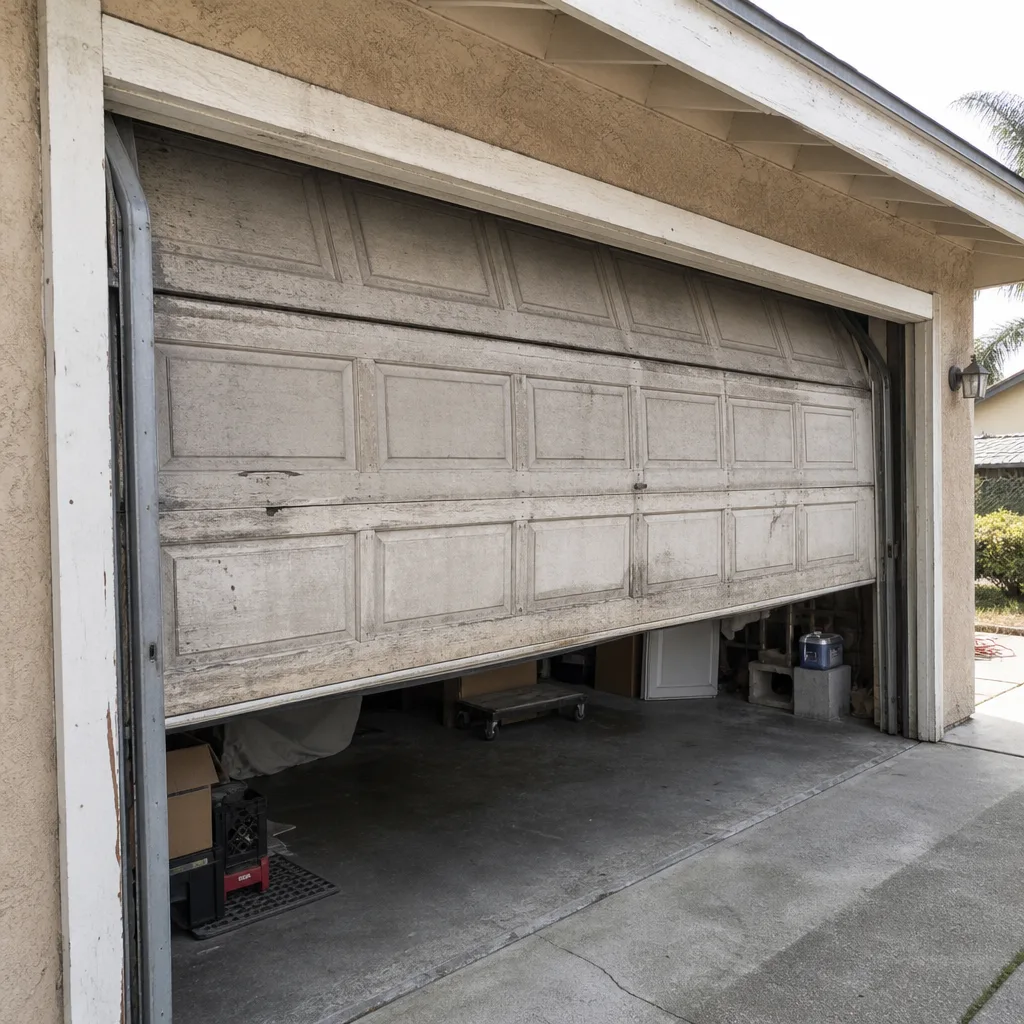 Before
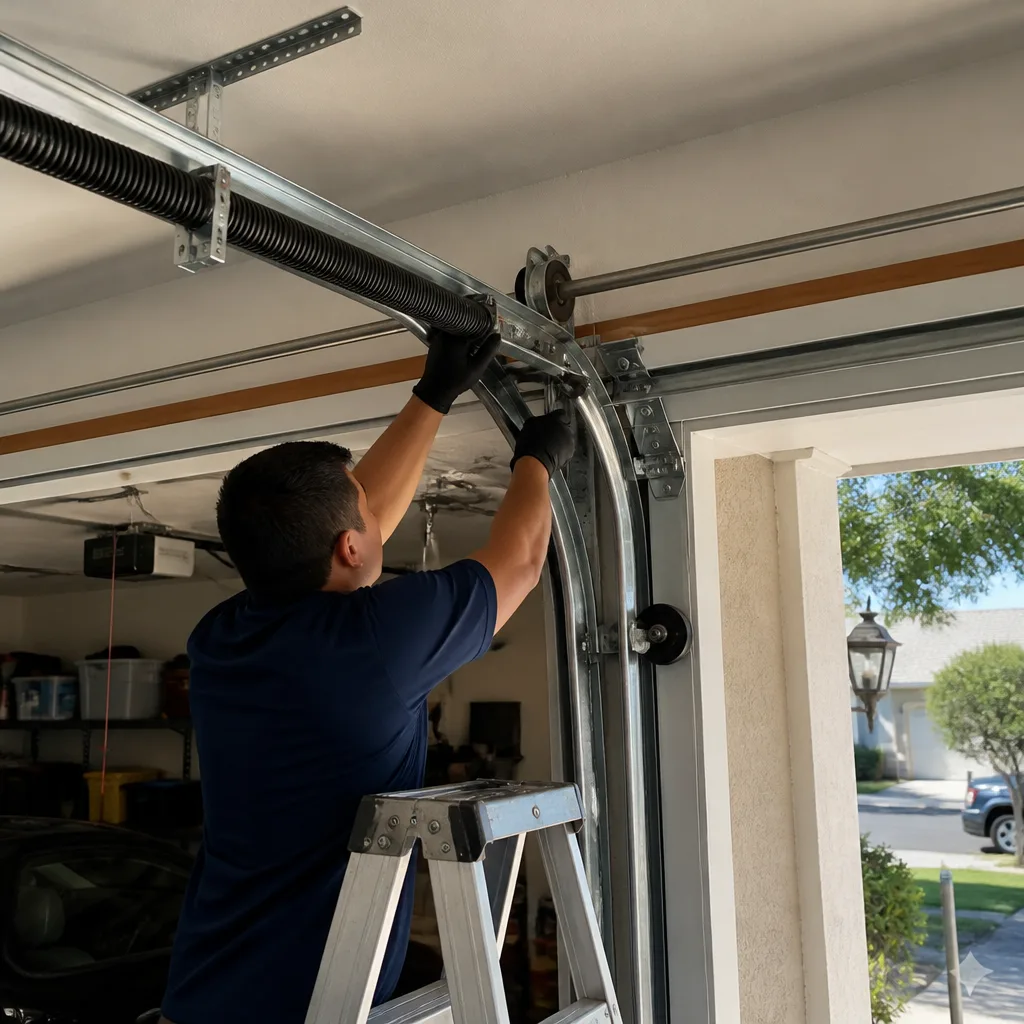 After