Last updated October 30, 2026
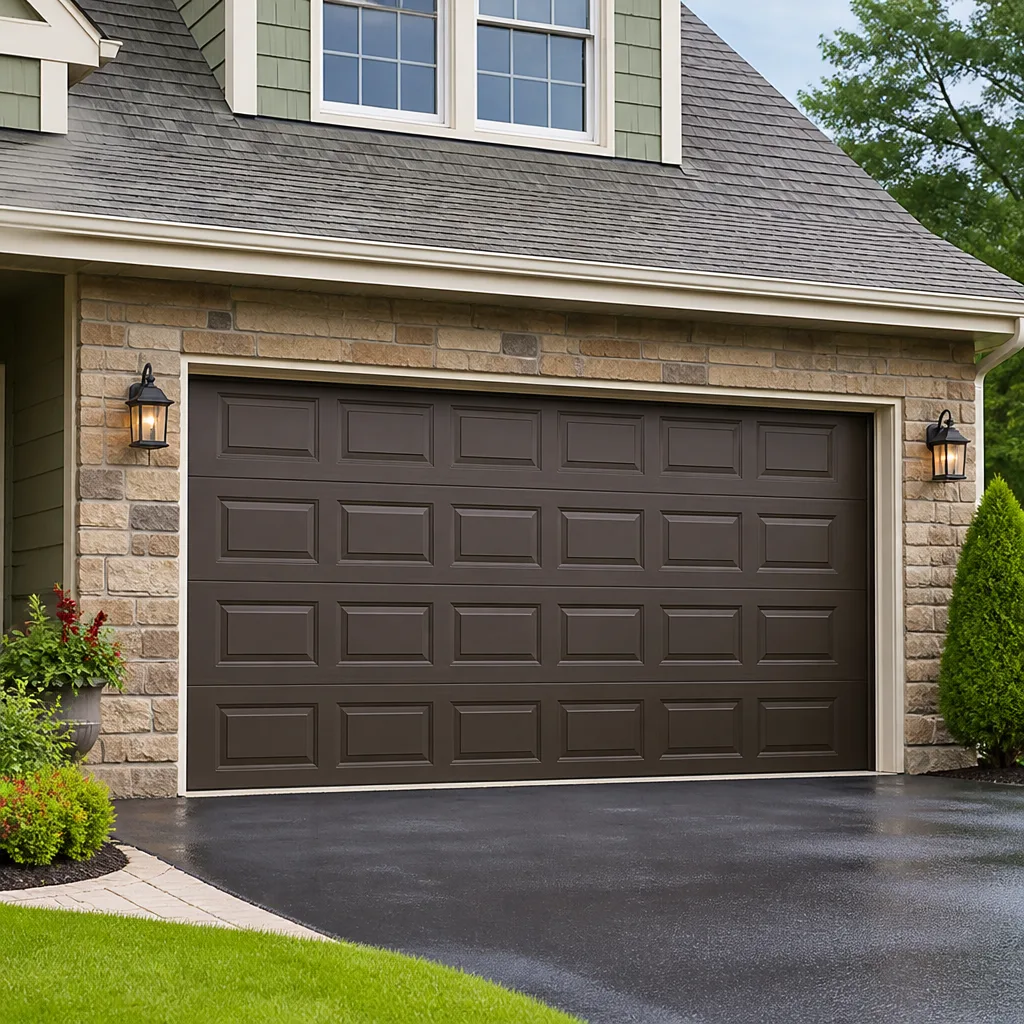 Raised-panel steel
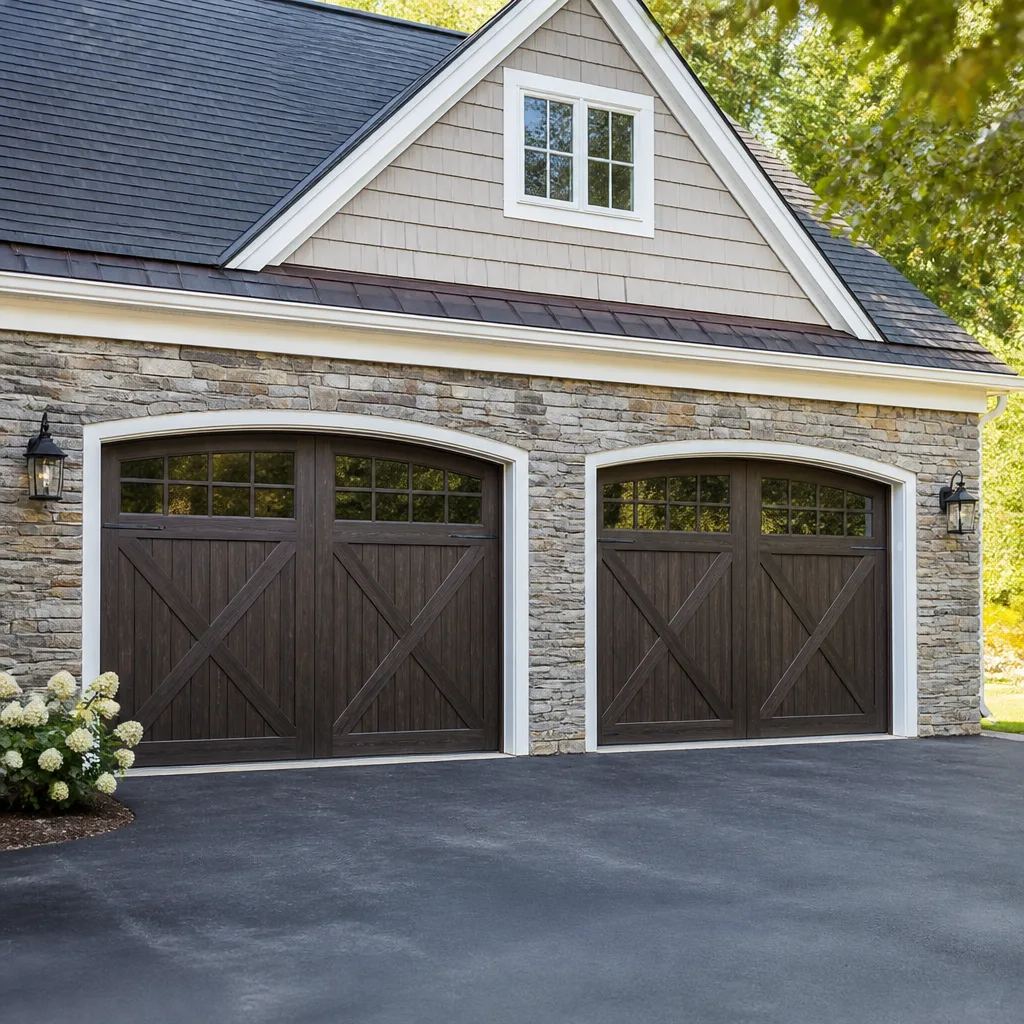 Carriage house
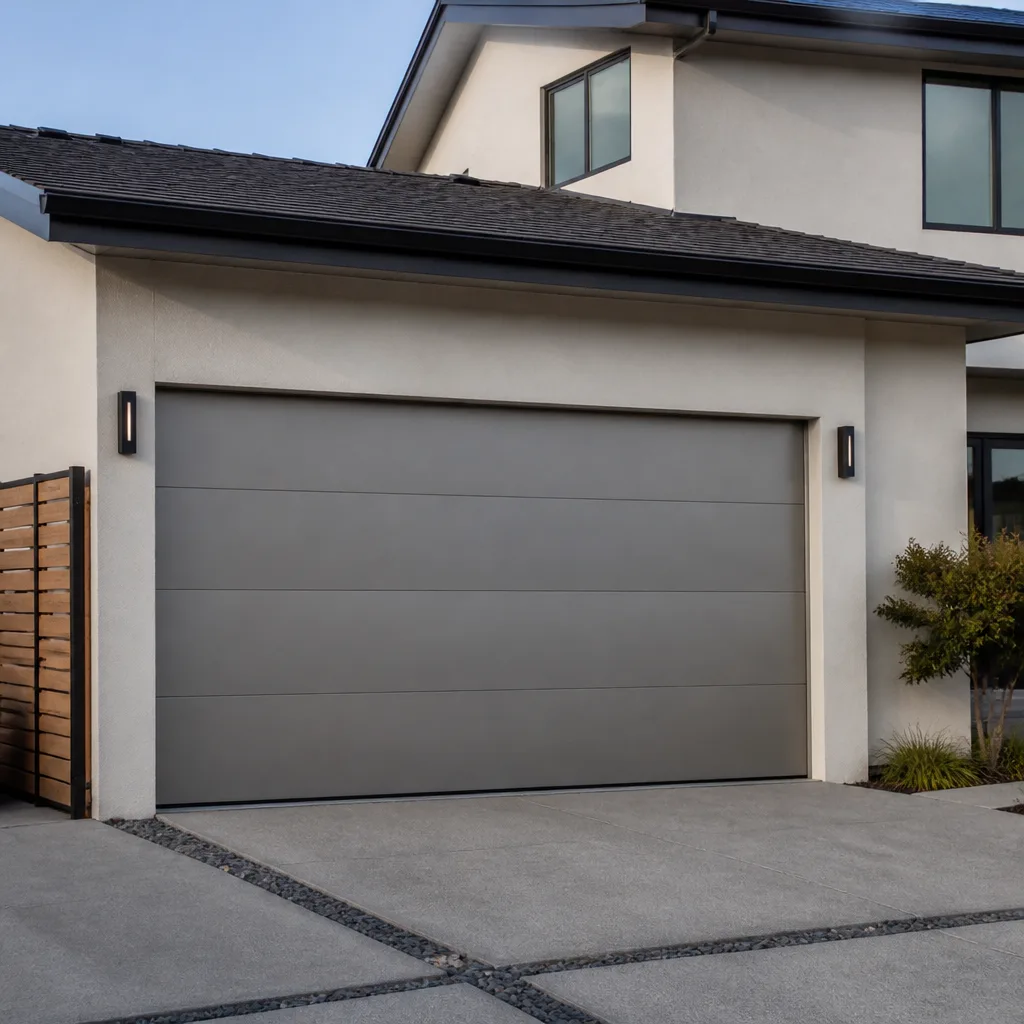 Modern flush
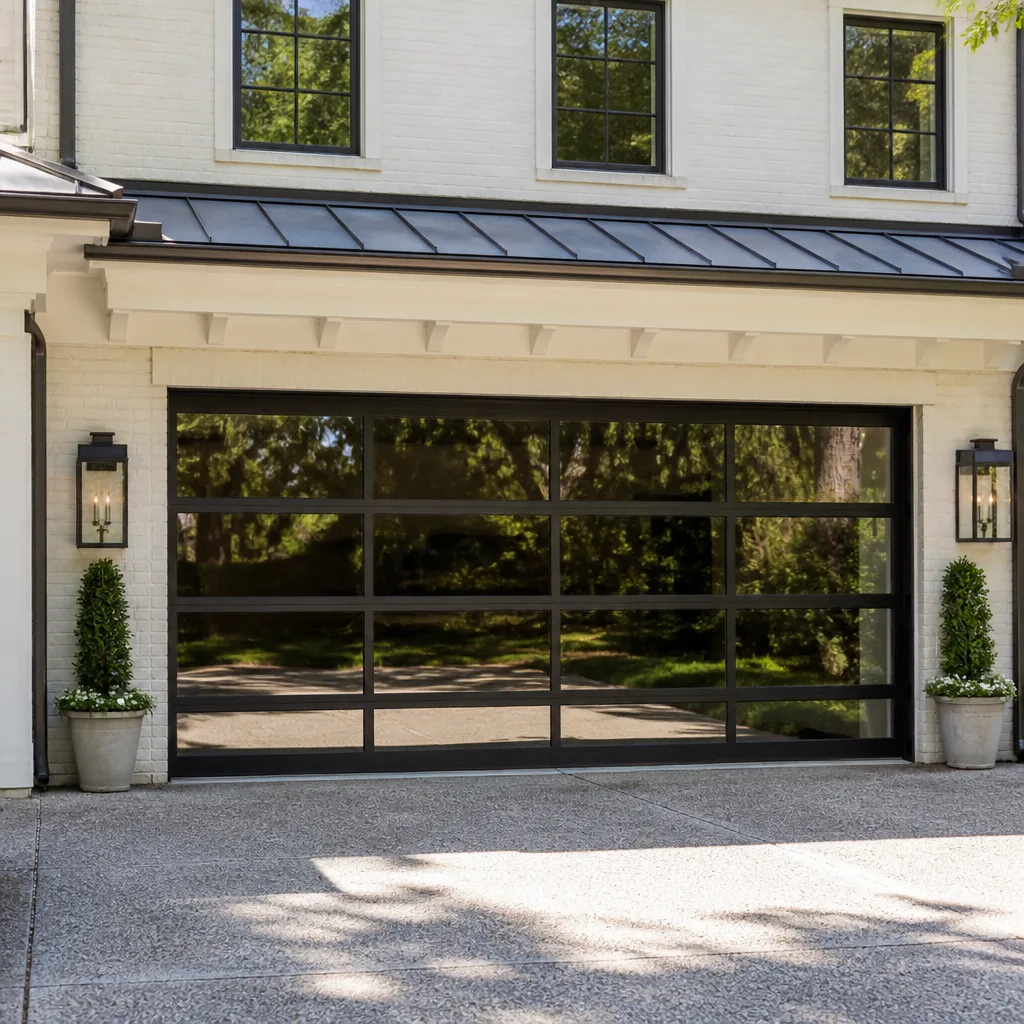 Full-view glass
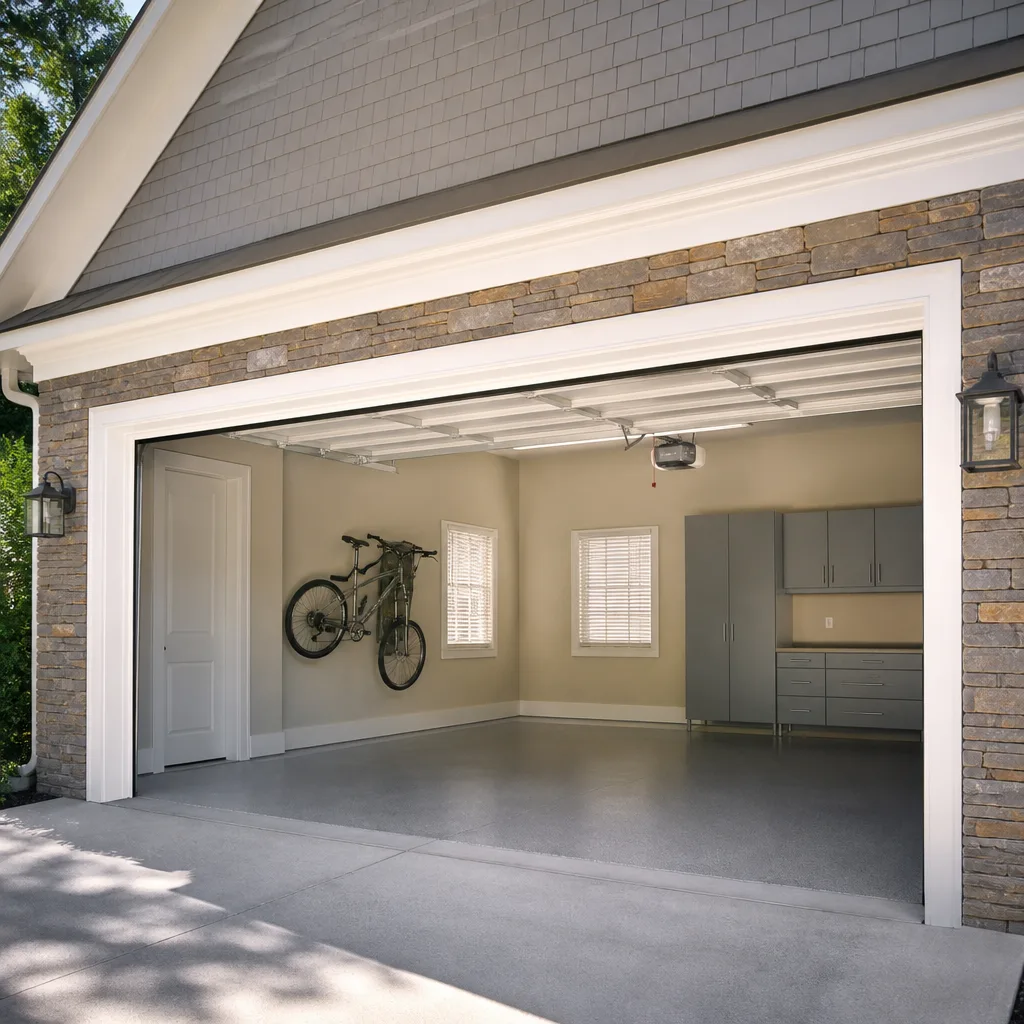 LiftMaster openers
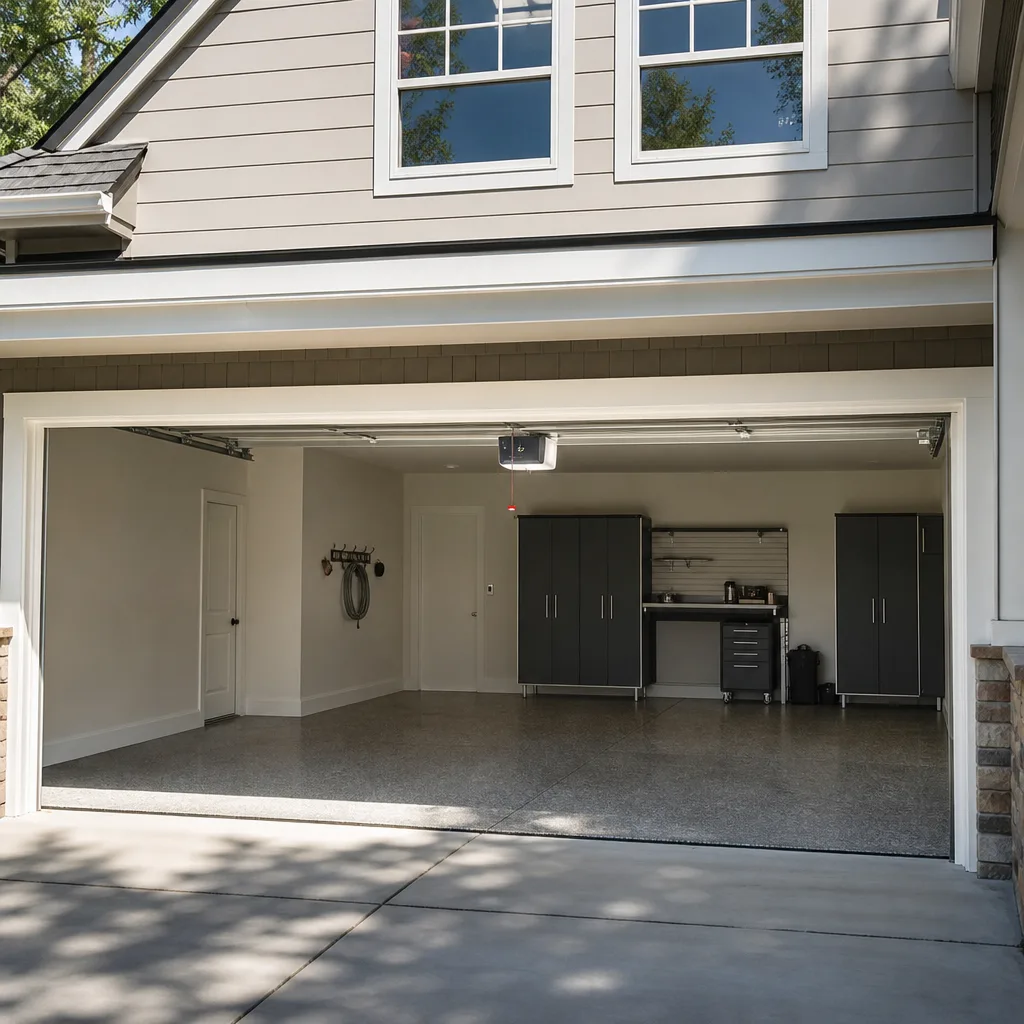 Chamberlain openers
Full 25-point door and opener safety check with every visit - springs, cables, rollers, tracks, and your LiftMaster or Chamberlain opener included
You get a price before we start. It does not change when the truck arrives.
Get your free estimateThe Complete Guide to Garage Door in Ontario
Most homeowners in Ontario can’t name the type of spring on their garage door. That single gap in knowledge is why people overpay for repairs, get quoted work they don’t need, or sit with a door that doesn’t open for three days when the fix would have taken an hour. This guide closes that gap. You’ll learn how to identify your exact door system in under five minutes, which problems are endemic to the Inland Empire’s heat and dust, and when the smart move is a repair versus a full replacement. If you live in Ontario and your garage door is your primary entry point, this is the only guide you’ll need to stop guessing and start making informed decisions. For more guides & resources, explore our blog.
Quick Answer
Your garage door is a system of four components working together: the door panels, the springs that counterbalance the weight, the opener that does the lifting, and the track and rollers that guide everything. In Ontario, heat expansion, dust infiltration, and UV exposure shorten the life of all four parts compared to coastal California. Most repairs cost between $150 and $450 when caught early, while full replacements run $1,200 to $3,800 depending on material and insulation level.
Styles & brands we work with
Table of Contents
- How to Identify Your Exact Garage Door System in Under 5 Minutes
- Why Ontario’s Climate Is Harder on Garage Doors Than You Think
- Door Problem or Opener Problem? How to Diagnose Without Wasting Money
- What Garage Door Work Actually Costs in Ontario
- Full Lifecycle Ownership: Install, Tune-Ups, Repairs, Replacement
- Ontario Permit Requirements: When You Need a Licensed Contractor
- Why the Brand on Your Door Determines the Right Repair
- Common Mistakes to Avoid
- When to Call a Professional
- Frequently Asked Questions
How to Identify Your Exact Garage Door System in Under 5 Minutes
Every garage door has four distinct components, and knowing which one is failing tells you whether you’re looking at a $19 part or a $900 replacement. Here’s how to map yours in Ontario before you ever pick up the phone.
Step 1: Look Above the Door and Identify Your Spring Type
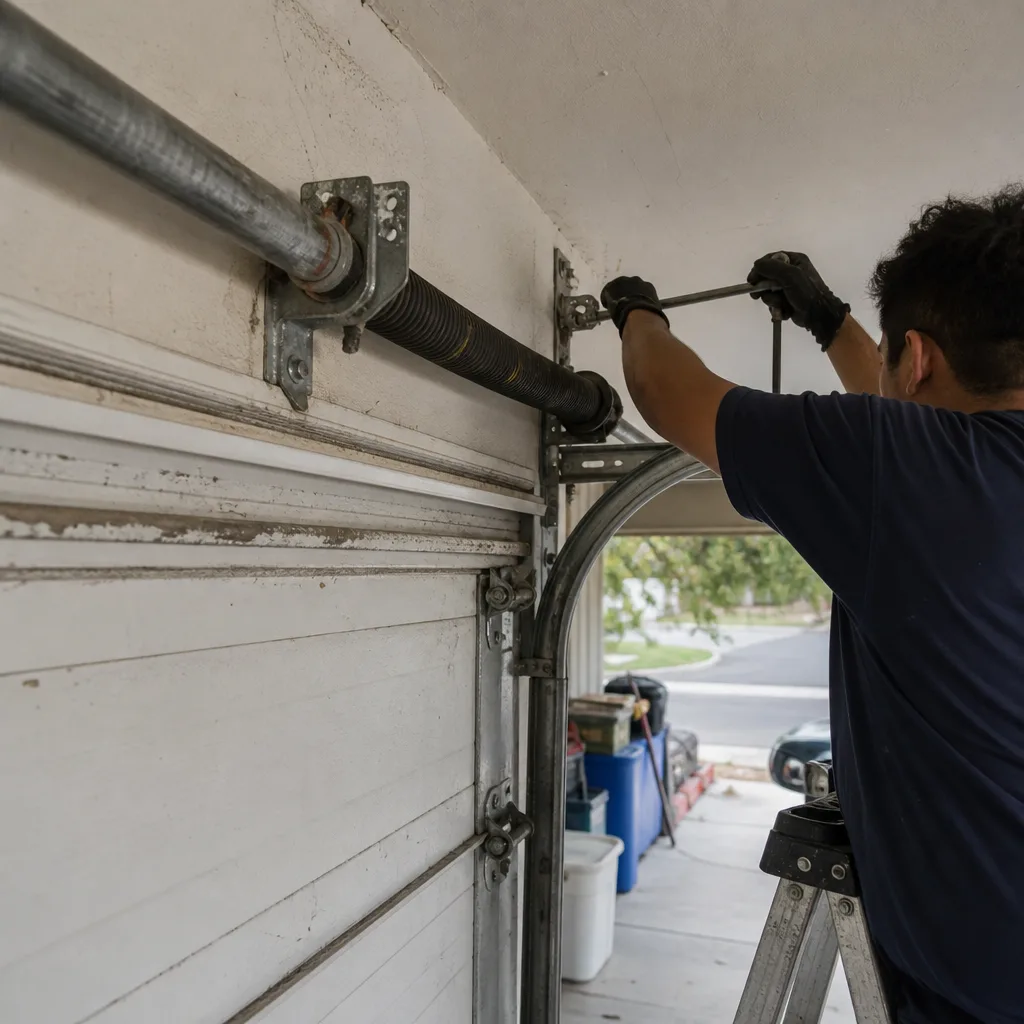
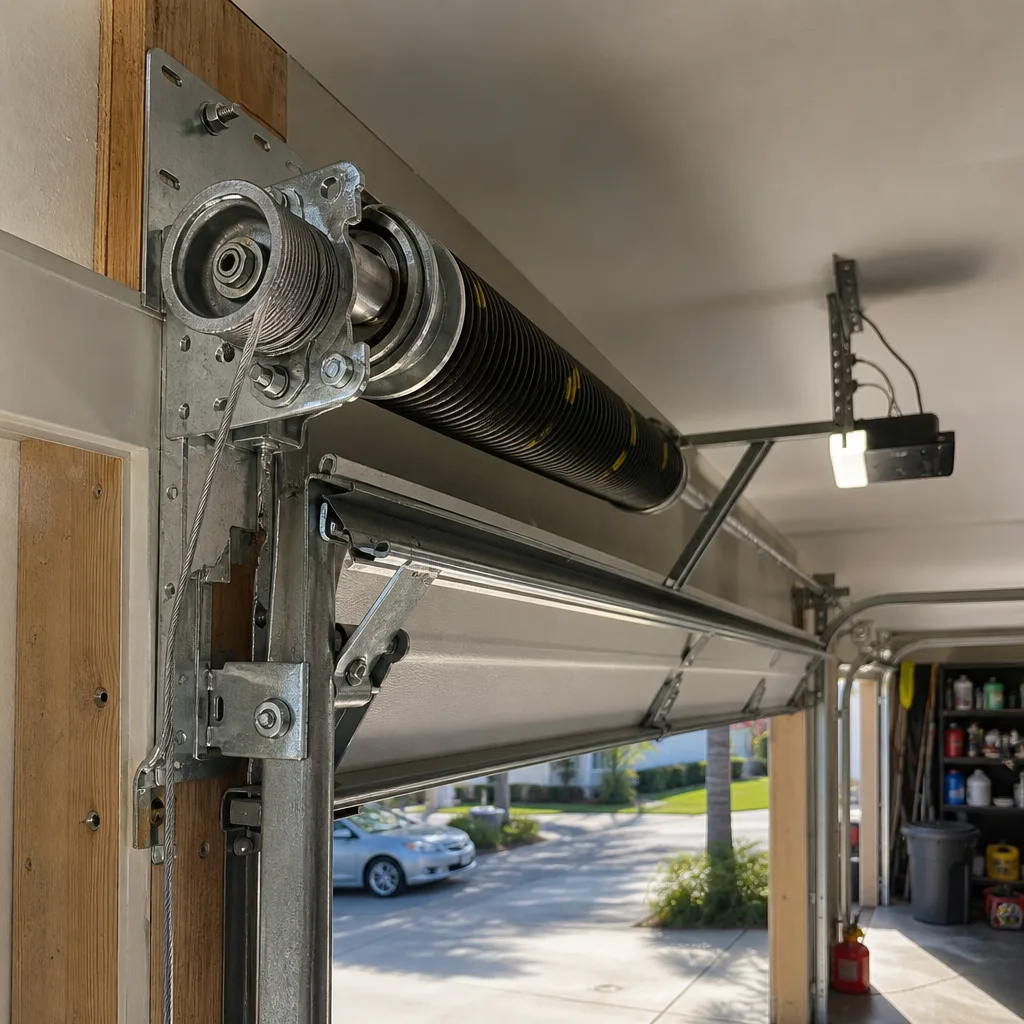
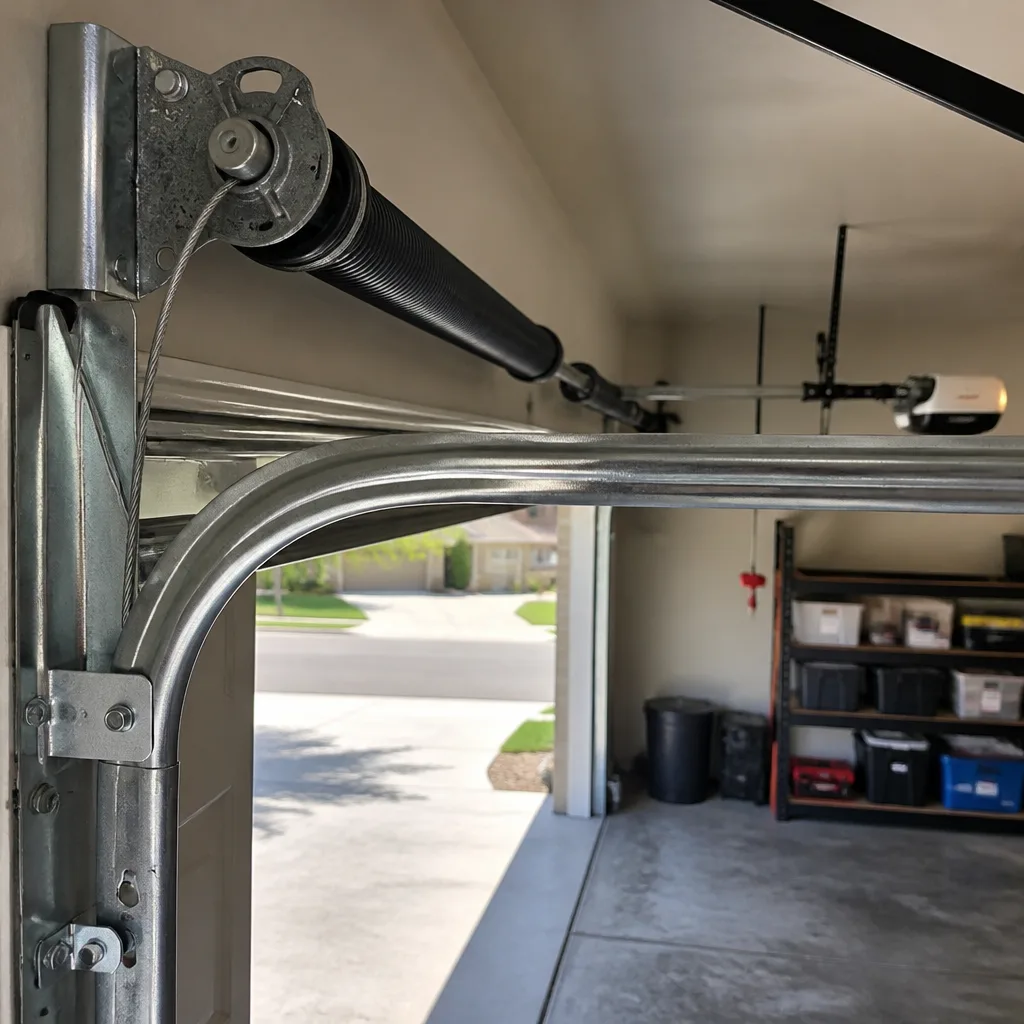
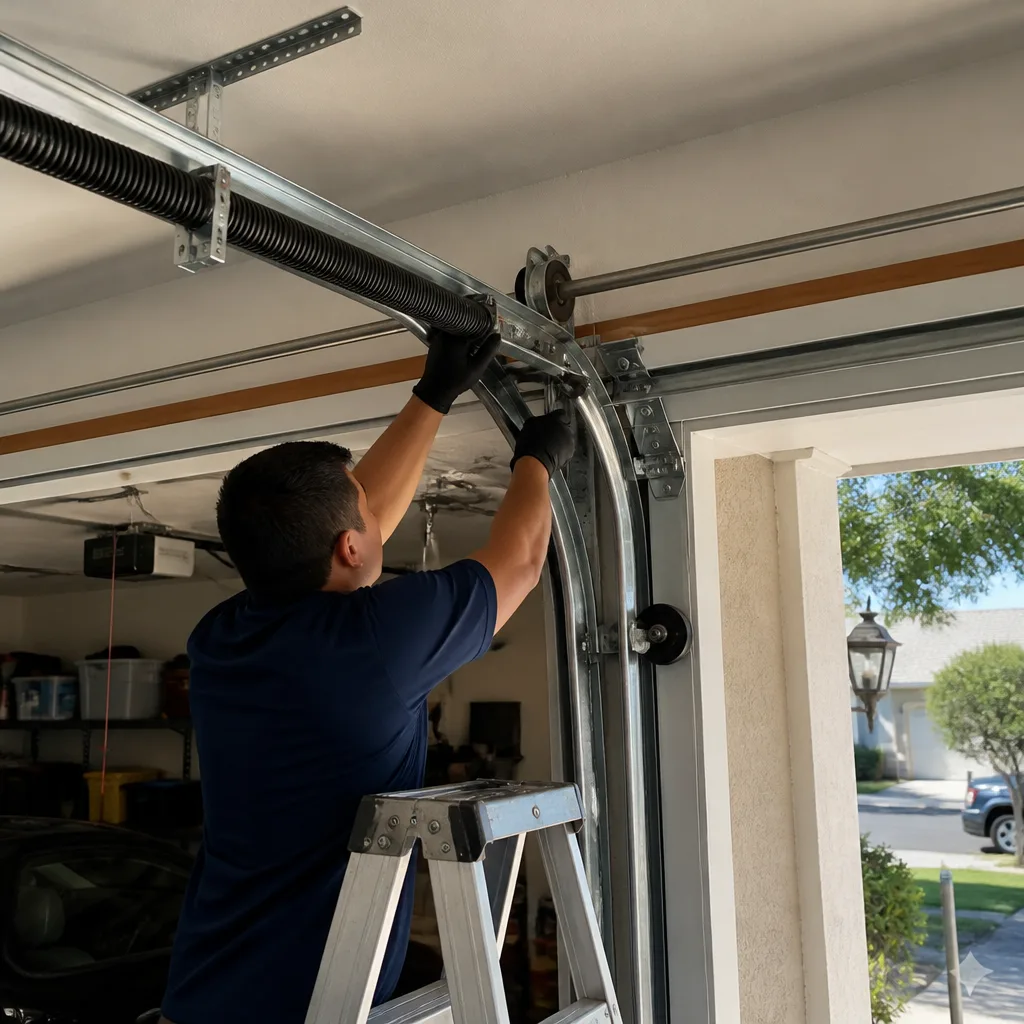
Stand inside the garage and look up. You’ll see one of two spring configurations. The first is torsion springs: one or two thick coils mounted horizontally on a metal bar directly above the closed door. These are the modern standard, installed on roughly 85% of Ontario homes built after 2000. The second is extension springs: long, thin springs mounted parallel to the horizontal tracks on either side of the door. These are common on older homes in neighborhoods like the historic Euclid Avenue corridor and parts of north Ontario. Torsion springs last longer, break more safely when they do fail, and cost slightly more to replace. Extension springs are cheaper upfront but break more often.
Step 2: Check Your Opener Drive Type
Look at the motor unit mounted on the ceiling. If there’s a metal rail with a chain running through it, you have a chain-drive opener. If there’s a smooth screw-shaped rod, it’s a screw drive. A metal or rubber belt inside a rail means belt drive. In Ontario, chain drives are the most common because they’re the cheapest, but they’re also the loudest. Belt drives, common on LiftMaster and Chamberlain units, run quieter and are worth the upgrade if your garage shares a wall with a bedroom.
Step 3: Note Your Panel Material
Steel panels are the standard on almost every Ontario home built since the 1980s. Wood doors still appear on custom homes in the foothills, but they’re rare and expensive to maintain in this climate. Vinyl and aluminum are less common here. If your door feels light and sounds hollow when you tap it, you have non-insulated steel. If it’s heavier and quieter, you have insulated steel, which matters for garages used as workshops or connected to living space.
Step 4: Find the Brand Name
Door brand names like Clopay or Amarr are usually stamped on a metal plate near the bottom edge of the top panel, or on the weather seal. Opener brands like LiftMaster, Genie, or Chamberlain are printed directly on the motor unit. Write these down before you call anyone. A shop that needs you to describe where the brand label is, rather than one that asks you to check for it, is one that may not actually know the equipment.
Why Ontario’s Climate Is Harder on Garage Doors Than You Think
Ontario sits in a sweet spot of environmental stress for garage door components. We’re far enough inland that summer temperatures regularly hit 100 degrees, but close enough to the San Bernardino Valley that we still get morning inversion layers and seasonal Santa Ana wind events. That combination creates three specific problems we see on service calls across Ontario week after week.
Spring fatigue from heat cycling. Garage door springs are rated for a certain number of cycles, usually 10,000, which is about 7 to 10 years of normal use. But heat accelerates metal fatigue. When your garage interior regularly hits 110 to 120 degrees in August, the spring steel loses tensile strength faster than it would in a coastal garage. A spring that would last 10 years in Huntington Beach might snap in year 7 here. If your Ontario garage faces west and absorbs afternoon sun, expect to replace torsion springs more frequently than the national average.
Dust and grit fouling rollers and tracks. The Inland Empire has real dust. Santa Ana winds push fine particulate from the high desert through the Cajon Pass, and it settles on everything including the inside of your garage. That grit works its way into rollers, hinges, and track channels. The result is exactly what you’d expect: metal-on-metal grinding, premature roller bearing failure, and track wear that throws the door out of alignment. Nylon rollers with sealed bearings handle this better than steel rollers, which is why we recommend them for almost every Ontario home.
UV degradation of weather seals and panels. The bottom seal and side seals on your garage door are made of rubber or vinyl, and the Ontario sun is unkind to both. After three to five years, they crack, shrink, and lose flexibility. Once the bottom seal fails, dust and heat enter the garage freely. Once the side seals fail, you lose whatever insulation value the door had. Steel panels themselves hold up reasonably well, but painted finishes fade faster on homes in newer subdivisions around the Ontario Ranch area where there’s little tree cover to block direct sun.
The practical takeaway: if you treat your garage door like it lives in a mild climate, you’ll replace parts more often and pay more over the life of the home. A little Ontario-specific maintenance goes a long way.
Door Problem or Opener Problem? How to Diagnose Without Wasting Money
This is the single most expensive mistake homeowners make in Ontario: calling for an opener replacement when the door itself is the problem, or replacing the door when the opener was failing all along. See our DIY vs Professional Garage Door: The Ontario Homeowner’s Decision Guide for help deciding when to call a pro. Here’s how to tell the difference in under two minutes.
Run the Manual Disconnect Test
- Close the door completely. Never run this test with the door open. If the door is stuck open, skip to calling a pro, because the spring tension needs to be assessed first.
- Find the emergency release cord. This is the red cord and handle hanging from the opener rail. Pull it straight down until it disengages. You should hear a click.
- Attempt to lift the door by hand. Grab the bottom handle or the bottom edge. A properly balanced door should lift smoothly with about 20 to 40 pounds of force and stay open about three feet off the ground on its own.
If the door lifts smoothly and stays in place when you release it, your springs and hardware are fine, and your problem is in the opener. Common opener failures include worn gears, a fried circuit board, or sensor misalignment. If the door is impossibly heavy, jerky, or won’t stay open, your problem is in the door system: broken spring, worn rollers, or track misalignment. No opener, no matter how powerful, is designed to lift a door whose spring has failed.
The Sound Test
When you press the remote, listen. A grinding noise from the motor area points to stripped gears inside the opener. A loud banging noise from the door itself points to a broken spring slamming against the shaft. A squealing noise that modulates as the door moves points to dry or failing rollers. These sounds tell you where the failure lives before you spend a dollar.
Misdiagnosing this costs Ontario homeowners real money. We’ve walked into garages where a customer was quoted $600 for a new LiftMaster opener when the actual problem was a $40 pair of rollers. And we’ve seen the reverse: a new door installation scheduled when the old panels were fine and the opener’s logic board had simply died. For a deeper dive on the opener side, see our Garage Door Opener Repair in Ontario page.
What Garage Door Work Actually Costs in Ontario
Prices in the Inland Empire run slightly below Los Angeles metro averages but above national benchmarks, mostly because of travel density and parts availability. For full details, see our Garage Door Cost Breakdown: The Ontario Homeowner’s Reference for 2026. Here’s a realistic breakdown for Ontario in 2025, based on what we quote and what competitors in the area charge.
| Service | Typical Ontario Price Range | Time on Site |
|---|---|---|
| Torsion spring replacement (single) | $180 – $340 | 45 – 90 minutes |
| Torsion spring replacement (pair) | $280 – $520 | 60 – 90 minutes |
| Extension spring replacement (pair) | $150 – $280 | 45 – 60 minutes |
| Roller replacement (full set, nylon) | $120 – $220 | 40 – 60 minutes |
| Cable replacement (pair) | $140 – $260 | 30 – 60 minutes |
| Opener repair (gear, board, or sensor) | $120 – $380 | 30 – 90 minutes |
| New opener installed (chain drive) | $380 – $650 | 2 – 3 hours |
| Full door replacement (single, non-insulated) | $1,200 – $2,100 | 4 – 6 hours |
| Full door replacement (single, insulated) | $1,800 – $3,800 | 4 – 6 hours |
| Panel replacement (single section) | $250 – $600 | 1 – 2 hours |
Three things drive the spread within these ranges. First, spring quality varies widely: economy spring kits carry different tensile ratings than high-cycle springs rated for 20,000 or more cycles. For Ontario’s heat, we recommend high-cycle springs even though they cost $40 to $70 more per spring, because they effectively double the replacement interval. Second, brand matters: a Chamberlain opener repair typically costs less than a Genie repair because parts are more widely stocked from local distributors in the Inland Empire. Third, whether you have a torsion or extension system changes labor time, not just parts cost.
One pricing rule that protects you in Ontario: the price quoted over the phone should be the price on the invoice. If a company won’t commit to a range before sending a truck, or if their quote mysteriously doubles after they “see the door in person,” that’s a red flag. Reputable shops see enough spring configurations in this area that they can quote accurately from your description. For full door replacement costs, see our Garage Door Installation in Ontario page for a complete breakdown by material and insulation level.
Full Lifecycle Ownership: Install, Tune-Ups, Repairs, Replacement
Think of your garage door as a car. You don’t wait for the engine to seize before changing oil, and you don’t replace the whole car because a headlight burns out. The same logic applies here. Here’s what full lifecycle ownership looks like for an Ontario home.
Installation: Year 0
A properly installed door is square, balanced, and quiet. The installer sets the spring tension precisely, aligns the photo-eye sensors, and programs the opener travel limits. If a door is installed correctly, the first few years should be completely uneventful. If your new door is noisy or shudders, the installation was wrong, not the door.
Routine Tune-Ups: Years 1 – 7
Most doors need a professional tune-up once a year, and in Ontario’s dust-heavy environment, skipping this is how small problems become replaceable parts. A tune-up includes: tightening every bolt on track and hinges; lubricating rollers, hinges, and the torsion spring; checking balance and travel limits; inspecting the weather seal for UV cracking; and tightening the drive chain or belt on the opener. You can do the lubrication yourself with a lithium-based spray, but the balance check should be left to someone who knows exactly what a properly weighted door feels like. A tune-up in Ontario typically runs $80 to $130 and takes about 45 minutes.
Repair Triggers: Years 3 – 10
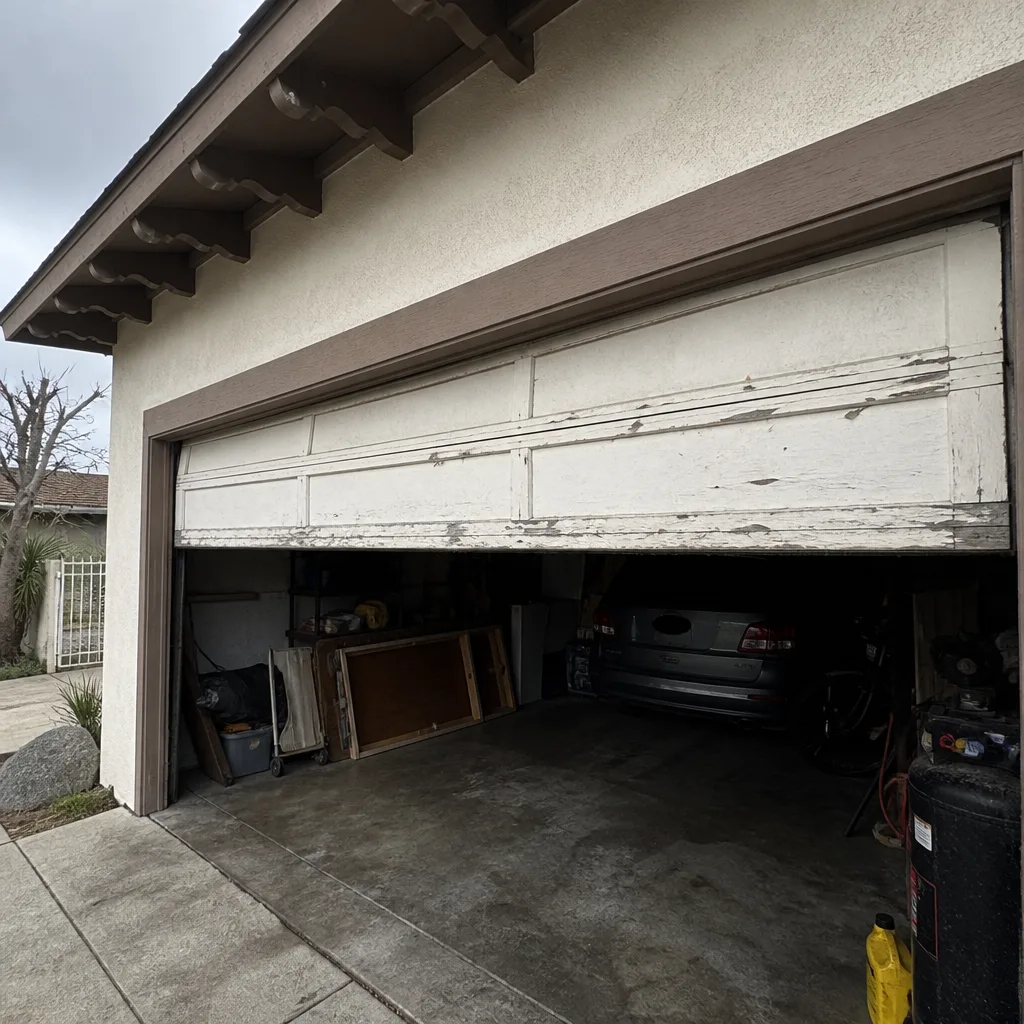
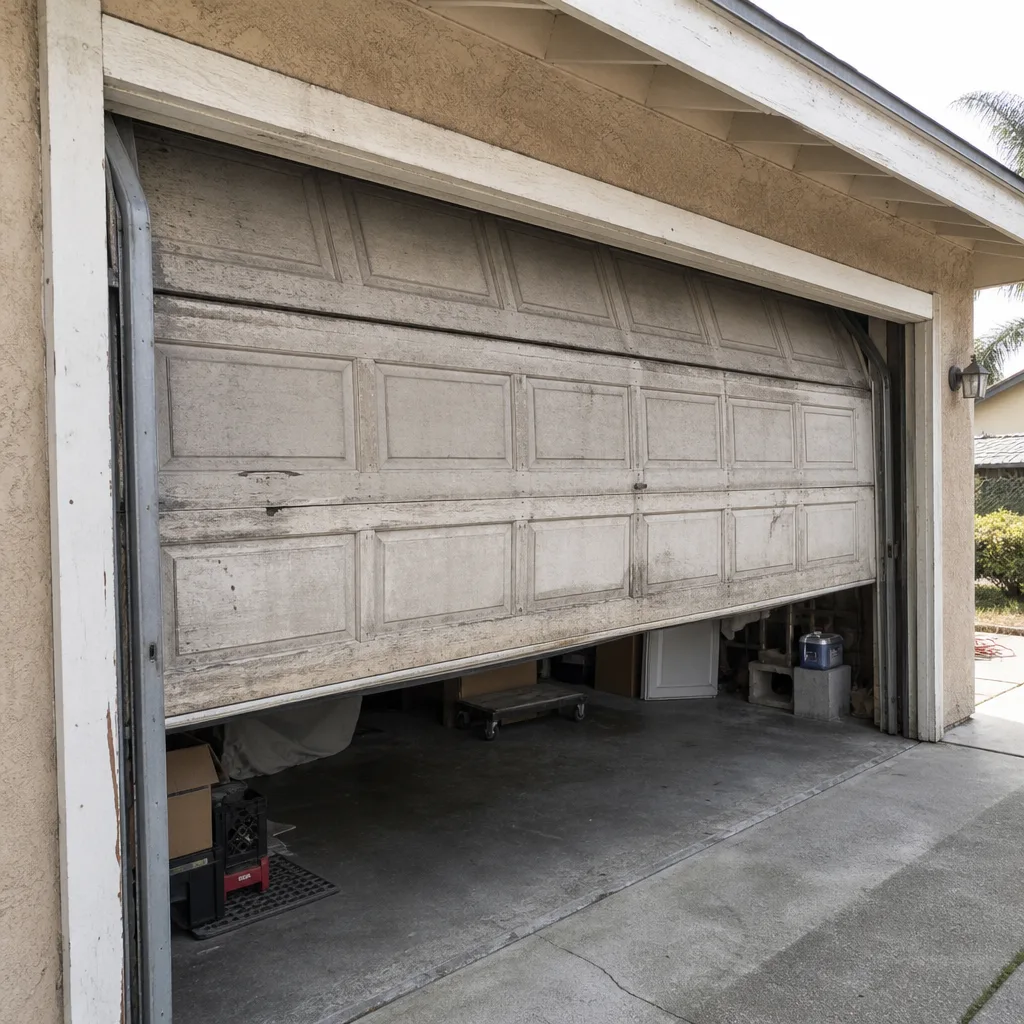
Here’s when to act, not wait. A door that’s suddenly louder than it was last month means a roller is failing or the track is misaligned. A door that reverses before closing means the sensors are dirty or the force setting is wrong. A door that’s visibly sagging on one side needs cable or spring attention. None of these fix themselves. Delaying a roller replacement by six months is how you end up replacing a bent track too, which triples the bill. For repair guidance specific to the components on your door, our Garage Door Repair in Ontario page walks through diagnosis by symptom.
Replacement Threshold: Years 10 – 20
A well-maintained steel door lasts 15 to 20 years in Ontario. The replacement decision comes down to four factors. First, safety: if the bottom panel is dented from a car bump and the structural integrity is compromised, replace it. Second, frequency: if you’re repairing something every six months, the aggregate cost will exceed a new door within two years. Third, energy: older non-insulated doors let every degree of Ontario summer heat into the garage, which pushes into the home if you have an attached garage with living space above. Fourth, appearance: if the paint is chalked and the panels are dented, a new door is the single highest-ROI curb appeal project you can do in Ontario’s competitive housing market.
Ontario Permit Requirements: When You Need a Licensed Contractor
Ontario is part of the City of Ontario’s building department jurisdiction, which means garage door work falls under specific rules. Here’s what actually applies to your project.
Repairs and opener replacements: no permit required. Replacing a spring, cable, roller, hinge, or the entire opener is considered routine maintenance under Ontario building code. You can hire any state-licensed contractor or do this work yourself if you know what you’re doing. However, the torsion spring work is genuinely dangerous, and we recommend a licensed professional for any spring that holds tension. The sharp steel and stored energy don’t care how many YouTube videos you’ve watched.
Full door replacement: permit usually not required, but there’s a caveat. Replacing a garage door with a same-size, same-configuration door does not trigger a permit in Ontario. You do need a permit if you’re changing the opening size, adding a new garage door where none existed, or converting a carport to an enclosed garage. For these projects, the city requires plans and a licensed contractor.
Door work on newer homes: check your HOA first. Much of Ontario’s newer development, particularly in the Ontario Ranch master-planned communities, falls under HOA covenants that restrict door styles, colors, and materials. The city permit office won’t care, but your HOA might. Before selecting a new door, check your CC&Rs. Some Ontario HOAs require board approval before any exterior change, and a door replacement counts.
Any contractor doing permitted work in Ontario must hold a valid California contractor’s license through the CSLB. You can verify a license number on the CSLB website in under a minute, and you should. The license requirement exists for a reason: unlicensed operators carry no liability insurance, and if they damage your door or your home, you’re paying for both.
Why the Brand on Your Door Determines the Right Repair
Not all garage doors and openers are made the same way, and that matters when you need parts or repairs. In Ontario, homeowners own a mix of brands depending on when their home was built, which builder installed it, and what the previous owner replaced. Here’s what you need to know about the most common systems we see.
Opener Brands: The Smart Home Era
LiftMaster and Chamberlain are the two most common opener brands in Ontario because they ship as standard equipment on many new-build homes. They’re both manufactured by the Chamberlain Group and share components, which means parts are rarely a problem. The distinction is retail channel: LiftMaster is sold through professional installers, while Chamberlain sells through home improvement stores. In practice, both are reliable, quiet, and compatible with MyQ smart home integration. Genie is the third major brand, common on 1990s and early 2000s homes and still a solid unit. The key point: a technician who works on LiftMaster and Chamberlain every week can diagnose your opener’s problem by symptom and usually carry the replacement gear or logic board on the truck. A generic technician might have to order parts, which means a second visit and a second service fee in Ontario.
Door Brands: The Panel Makers
Clopay and Amarr are the two biggest door manufacturers in North America, and Ontario homes skew heavily toward both. Clopay doors are known for wide style variety, which means older Clopay models sometimes require brand-specific panel sizing. Amarr doors are known for their steel gauge consistency and are common on production homes. Wayne Dalton doors appear on some Ontario homes from the 1990s and early 2000s, particularly the builder-grade single-layer models that are now reaching replacement age. The point isn’t that one brand is better; it’s that panel dimensions, hinge placement, and spring rates are brand-specific, and ordering the wrong panel or spring for your door means a wasted week and a door that still doesn’t work.
What This Means for Your Repair
When a technician shows up knowing that your 2007 Clopay door uses a specific torsion spring torque rating, or that your LiftMaster opener’s gear kit is a two-hour job rather than a full unit replacement, you save money and time. At Daybreak Garage Door Repair, we’re factory-familiar with eight major brands, including LiftMaster, Chamberlain, Genie, Clopay, Amarr, Wayne Dalton, Craftsman, and Raynor. That means when we arrive at a home in Ontario, we already know the quirks of what’s on your home, not just how to read a manual. From opener to panel, the right fix for your door is a brand-matched fix, not a generic one.
Common Mistakes to Avoid
- Ignoring a noisy door because it still works. A grinding or squealing door is a component failing under load. In Ontario’s dusty conditions, rollers and bearings don’t get better on their own. The noise is your early warning, and acting on it saves you a track replacement later.
- Lubricating everything with WD-40. WD-40 is a solvent and degreaser, not a lubricant. Spraying it on hinges and rollers washes away the protective grease and accelerates wear. Use a lithium-based spray designed for garage door rollers, or have a professional service the moving parts during a tune-up.
- Running the door during a heat wave without checking spring condition. Ontario’s 100-plus-degree summer days push marginal springs over the edge. If your spring is more than seven years old and you haven’t had it inspected, August is exactly when it will snap, usually with your car inside the garage.
- Replacing the opener when the door is the problem. This is the most expensive misdiagnosis in the industry. Before you authorize an opener replacement, run the manual disconnect test or have someone run it for you. A new opener cannot compensate for a dead spring.
- Skipping the permit check on a full door replacement. If you’re changing the opening size or your home is in an HOA-governed development in Ontario, a door replacement without checking covenants or city rules can cost you a fine and a redo. Twenty minutes of research saves thousands.
- Buying the cheapest spring to save $50. Economy springs are rated for fewer cycles and fail sooner, especially in a hot garage. The high-cycle spring costs slightly more per unit but lasts nearly twice as long. You’re not saving money; you’re prepaying for the next service call.
- Hiring a contractor without checking the CSLB license. Ontario is full of unlicensed operators who undercut licensed shops by 30 percent and then vanish when the repair fails. Verifying a license number takes less than a minute and protects you from paying twice for the same job.
When to Call a Professional
Some garage door work is genuinely safe to handle yourself: lubricating rollers, tightening visible bolts, cleaning photo-eye sensor lenses, and replacing remote batteries. Other work is not. Call a professional if your torsion spring has snapped (the loud bang you heard was stored energy releasing, and that spring holds enough force to cause serious injury), if your cables are frayed or the door is hanging unevenly, if the opener’s logic board is dead, or if the door has come off its track. Our Garage Door Emergency Preparedness Guide for Ontario Homes covers what to do before help arrives. Any repair that requires you to touch a spring under tension or work near a twisted cable should be handled by someone trained to do it every day. Daybreak Garage Door Repair offers free estimates in Ontario, and one call covers it all, from opener to panel. Reach us at (877) 588-6760 to get your door diagnosed and priced before any work begins.
Frequently Asked Questions
Most garage door repairs in Ontario cost between $150 and $450, with spring replacement running $180 to $340 for a single torsion spring and $280 to $520 for a pair. The final price depends on your spring type, your door brand, and whether you choose economy or high-cycle springs. Call (877) 588-6760 for an exact quote before any work starts.
In most cases, yes. Daybreak Garage Door Repair carries common springs, rollers, hinges, and opener parts on the truck, which means most Ontario repair calls are completed on the first visit. For same-day service, call (877) 588-6760 with your door brand and a description of the symptom.
A door problem is physical: springs, cables, rollers, or track. An opener problem is mechanical or electrical: gears, logic board, sensors, or remote. Pull the red emergency release cord and try lifting the door by hand. If it’s heavy or won’t stay open, it’s a door problem. If it moves freely but won’t operate with the remote, it’s the opener.
For a same-size, same-configuration door replacement, no permit is required in Ontario. You need a permit if you’re changing the opening size, adding a new garage door where none existed, or converting a carport to an enclosed garage. Check your HOA covenants first if you live in a master-planned community like Ontario Ranch.
A well-maintained steel door lasts 15 to 20 years in Ontario, but springs, rollers, and weather seals need replacement more frequently. Springs typically last 7 to 10 years, nylon rollers 5 to 8 years, and bottom seals 3 to 5 years under our heat and dust conditions.
At Daybreak Garage Door Repair, the price quoted over the phone is the price on the invoice. We quote by your description of the door and the symptom, and we honor that price unless you authorize additional work. If a contractor’s quote doubles after they arrive, call someone else. The price is quoted and agreed before any work starts.
The Bottom Line
Your garage door is a system, not a single part, and in Ontario that system faces specific stresses from heat, dust, and UV exposure. The homeowners who avoid the biggest repair bills are the ones who learn to identify their spring type, understand the difference between door and opener failures, schedule annual tune-ups, and call a brand-familiar professional when something breaks rather than waiting. You now know how to diagnose the basics, what fair pricing looks like in this market, and when a repair makes more sense than a replacement. If your door is acting up, call Daybreak Garage Door Repair at (877) 588-6760 for a free estimate. One call covers it all, and we know your brand.
Written by the team at Daybreak Garage Door Repair, serving Ontario since 2011.
See the difference
 Before
 After
 Before
 After
 Before
 After